Unlock the Zesty Secret: Crafting the Perfect Homemade Salsa!
Ever wondered how that vibrant, fresh Salsa you crave at your favorite Mexican restaurant achieves its irresistible zing? What if I told you that creating an even more delicious, personalized version is not only achievable in your own kitchen but also incredibly rewarding? Beyond just a condiment, a truly homemade Salsa offers a burst of fresh flavors that elevates any meal, from simple tacos to gourmet grilled fish. And just as the rhythmic beats of Salsa dancing bring joy and energy, so too does the vibrant symphony of flavors in a well-made Salsa dancing on your palate. This comprehensive guide will walk you through crafting a sensational homemade Salsa that will have your taste buds doing a happy dance, ensuring every scoop is a celebration.
Ingredients & Kitchen Tools
Gather your culinary arsenal for this delightful adventure!
- Ripe Tomatoes (4-5 medium, e.g., Roma or beefsteak): The foundation of our Salsa. Choose firm, red tomatoes for optimal flavor and texture.
- Red Onion (1/2 medium): Adds a pungent, sweet kick.
- Jalapeño Pepper (1-2, deseeded for less heat, or left with seeds for more): Provides a subtle warmth and authentic Mexican flavor.
- Fresh Cilantro (1/2 cup, packed): Essential for that signature fresh, herbaceous note.
- Lime (1-2, juiced): Brightens flavors and adds a tangy zest.
- Garlic (2 cloves, minced): Deepens the savory profile.
- Salt (1/2 teaspoon, or to taste): Enhances all other flavors.
- Black Pepper (1/4 teaspoon, or to taste): Adds a subtle spice.
- Cumin (1/4 teaspoon, optional): For an earthy, smoky undertone.
Kitchen Tools:
- Cutting Board: A stable surface for chopping.
- Sharp Knife: For precise dicing and mincing.
- Food Processor (optional, but recommended for finer texture): Speeds up chopping; a blender can also work.
- Large Mixing Bowl: For combining ingredients.
- Citrus Juicer: To efficiently extract lime juice.
- Measuring Spoons and Cups: For accurate ingredient quantities.
Prep Time & Cooking Schedule
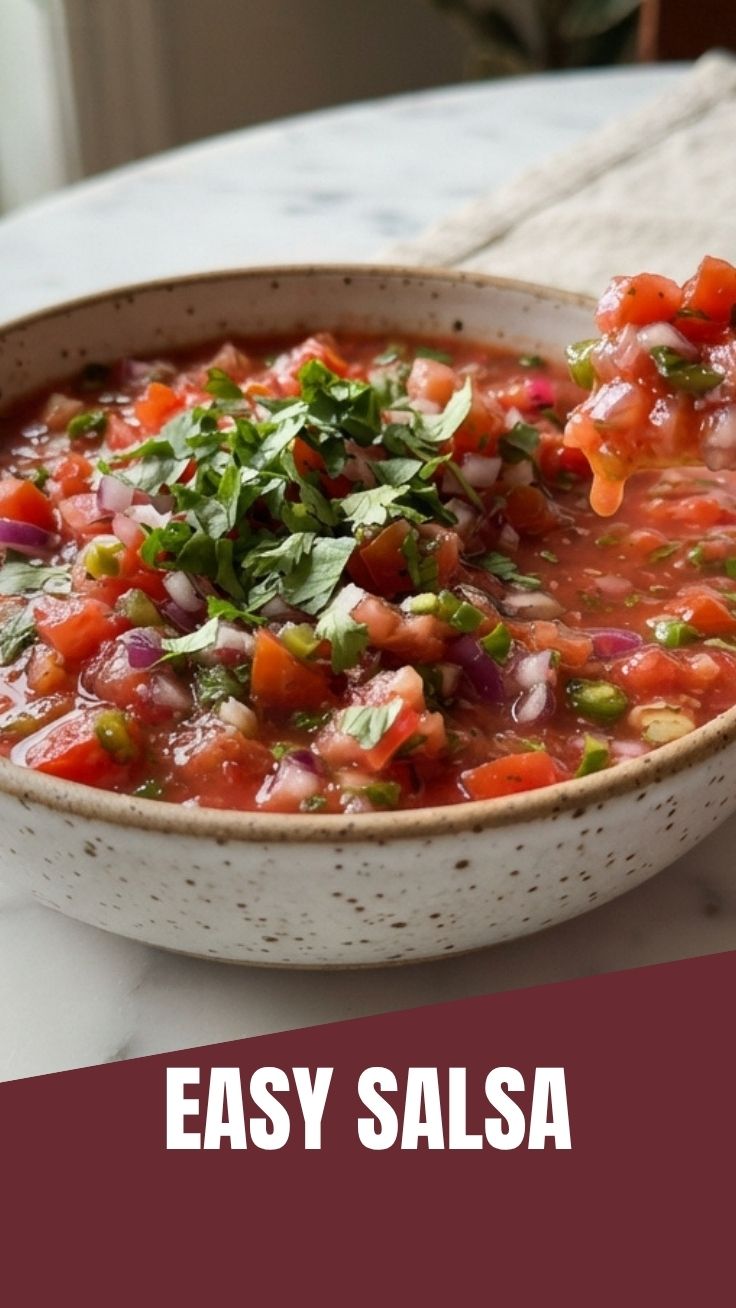
- Prep Time: 15-20 minutes (if chopping by hand), 5-10 minutes (with a food processor). This recipe is all about fresh, raw ingredients, making it quick to prepare.
- Resting Time: 30 minutes (minimum), 1 hour (recommended). Allowing the Salsa to rest helps the flavors meld and deepen, transforming individual ingredients into a cohesive, delicious blend. Plan to make it slightly ahead of when you plan to serve it for the best results.
Step-by-Step Instructions
1. Prepare the Vegetables: Wash and thoroughly dry all produce. Dice the tomatoes into small, even pieces (about 1/4 inch). Finely dice the red onion. Mince the garlic cloves. For the jalapeño, cut it in half lengthwise, remove the seeds and white membrane for less heat, then finely dice. Finely chop the fresh cilantro. If using a food processor, roughly chop these ingredients first.
2. Combine Ingredients: In your large mixing bowl, add the diced tomatoes, red onion, jalapeño, minced garlic, and chopped cilantro.
3. Season and Mix: Squeeze the fresh lime juice over the mixture. Add the salt, black pepper, and optional cumin.
4. Gentle Stir: Gently stir all the ingredients together until well combined. Be careful not to overmix, as this can bruise the ingredients and release too much liquid. The goal is a vibrant, chunky Salsa that feels as lively and spirited as a round of Salsa dancing.
5. Rest and Serve: Cover the bowl and refrigerate for at least 30 minutes. This resting period is crucial for the flavors to marry and develop. Before serving, give it one final stir.
Nutritional Benefits & Advantages
Homemade Salsa is a powerhouse of nutrition! Tomatoes are rich in lycopene, a potent antioxidant, while onions and garlic offer compounds known for their anti-inflammatory and immune-boosting properties. Cilantro is packed with vitamins K and A, and jalapeños contain capsaicin, which can boost metabolism. By making it yourself, you control the salt and sugar content, avoiding unnecessary additives found in store-bought versions. It’s a low-calorie, high-flavor addition to almost any meal.
Tips, Variations & Cooking Advice
- Spice Level: For more heat, leave some or all of the jalapeño seeds in. For even more fire, add a dash of cayenne pepper or a finely minced serrano pepper.
- Roast for Depth: For a richer, smoky flavor, roast your tomatoes, onions, and jalapeños before dicing. This adds a beautiful depth that’s perfect for a roasted Salsa.
- Fruity Twist: Add diced mango, pineapple, or corn for a sweet and savory fruit Salsa that pairs wonderfully with grilled chicken or fish.
- Herbal Alternatives: If cilantro isn’t your favorite, try a blend of fresh parsley and mint for a different, refreshing profile.
Common Mistakes to Avoid
- Over-processing: If using a food processor, pulse just a few times. Over-processing will turn your Salsa into a watery puree instead of a chunky delight.
- Not Resting: Skipping the resting period means missing out on the full flavor development. Patience is key for the best results.
- Too Much Salt/Lime: Add salt and lime juice gradually, tasting as you go. You can always add more, but you can’t take it away!
- Ignoring Freshness: The quality of your ingredients directly impacts the taste of your Salsa. Use the freshest, ripest produce available.
Storage & Meal Prep Tips
Store your homemade Salsa in an airtight container in the refrigerator. It will stay fresh for 3-5 days. While it can be frozen, the texture of the tomatoes might become a bit mushy upon thawing. For meal prep, make a large batch at the beginning of the week to enjoy with various meals, as a snack with chips, or as a vibrant topping.
Conclusion
Crafting your own homemade Salsa is a culinary journey that rewards you with fresh, vibrant flavors and complete control over ingredients. It’s more than just a condiment; it’s a celebration of simple, wholesome ingredients coming together in perfect harmony. Just like the exhilarating energy of Salsa dancing, this Salsa will bring a lively zest to your table. So, don’t hesitate—dive into your kitchen and create this spectacular Salsa. Share your creations in the comments below, or tell us your favorite ways to enjoy this classic!
FAQs
Q1: Can I use canned tomatoes for this recipe?
A1: While fresh tomatoes are highly recommended for the best flavor and texture, you can use good quality canned diced tomatoes if fresh are not available. Drain them well to avoid a watery Salsa.
Q2: How do I make my Salsa less watery?
A2: To reduce wateriness, try seeding your tomatoes before dicing them. You can also drain the Salsa through a fine-mesh sieve for a few minutes before serving.
Q3: Can I add other vegetables to this Salsa?
A3: Absolutely! Diced bell peppers (red, yellow, or orange), corn kernels, or black beans make excellent additions for extra flavor and texture.
Q4: How long does homemade Salsa last?
A4: Stored in an airtight container in the refrigerator, fresh homemade Salsa will typically last for 3-5 days.
Q5: What’s the best way to adjust the heat level?
A5: For less heat, remove all seeds and white membranes from the jalapeño. For more heat, leave some or all of the seeds, or add a pinch of cayenne pepper or a spicier chili like a serrano.