Embrace the Chill with a Burst of Flavor: Your Ultimate Guide to a Vibrant Winter Fruit Salad!
Ever found yourself craving a refreshingly light yet utterly satisfying dish during the colder months? While hearty stews and comforting baked goods often dominate our Winter Salad Recipes, there’s a unique joy in a beautifully crafted fruit salad, especially one designed to sing with the seasonal produce. Forget bland, watery fruit bowls; today, we’re diving into the art of creating a vibrant, nourishing, and surprisingly easy Winter Fruit Salad right in your own kitchen. Preparing this at home isn’t just about saving a few dollars; it’s about customizing flavors, ensuring peak freshness, and elevating a simple concept into a delightful culinary experience that brightens even the greyest winter days.
Ingredients & Kitchen Tools
Crafting the perfect Winter Fruit Salad requires a thoughtful selection of ingredients and a few basic kitchen essentials.
- Pomegranates (1 large): Adds a jewel-like burst of tartness and crunch. Look for heavy, unblemished pomegranates.
- Oranges (2-3, naval or cara cara): Provides sweet, juicy segments. Cara cara oranges offer a beautiful pink hue.
- Kiwis (3-4): Their vibrant green and tangy-sweet flavor offer a delightful contrast. Choose firm but yielding kiwis.
- Bosc Pears (2, firm-ripe): Offers a delicate sweetness and crisp texture. Avoid overly soft pears.
- Honeycrisp Apples (2): Known for their crispness and balanced sweet-tart flavor.
- Cranberries (1/2 cup, fresh or frozen): Adds a tart zing and festive color. If using frozen, no need to thaw completely.
- Walnuts or Pecans (1/4 cup, toasted, optional): For an added layer of nutty crunch. Briefly toast in a dry pan for enhanced flavor.
- Fresh Mint Leaves (2 tbsp, chopped, optional): A refreshing garnish that brightens the whole dish.
- Honey or Maple Syrup (1-2 tbsp, optional, for dressing): To lightly sweeten and bind the fruit. Adjust to taste.
- Lime or Lemon Juice (1 tbsp, for dressing): Prevents browning and adds a zesty lift.
Kitchen Tools:
- Large Mixing Bowl: Essential for combining all the ingredients without spillage.
- Sharp Knife: For precise and safe fruit preparation.
- Cutting Board: A stable surface for chopping.
- Paring Knife: Useful for segmenting oranges and peeling kiwis.
- Whisk or Fork: For mixing the optional dressing.
Prep Time & Cooking Schedule
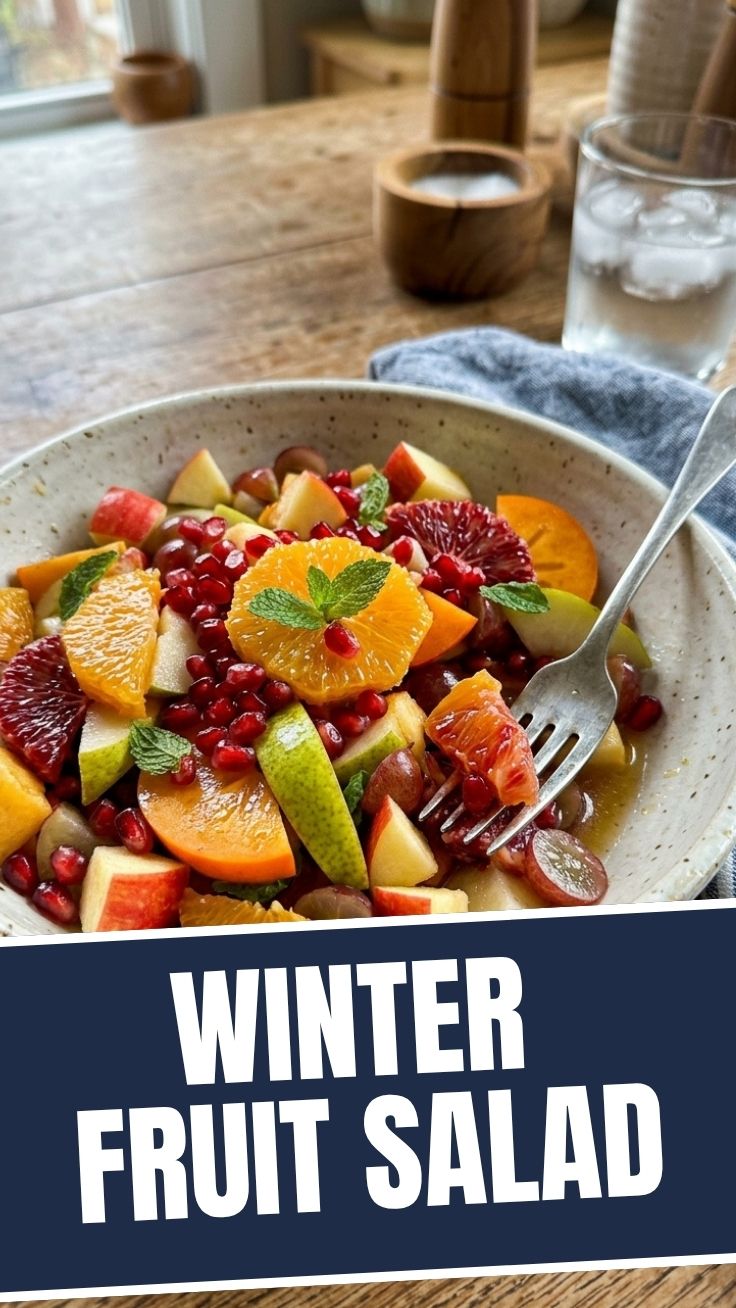
This delightful Winter Fruit Salad is all about fresh prep! There’s no cooking involved, making it a quick and healthy option.
- Prep Time: 20-25 minutes
- Resting Time (Optional): 15-30 minutes (allows flavors to meld, especially if using a dressing).
This recipe is perfect for last-minute gatherings or as a refreshing make-ahead component for your week’s meals. The longest part is the fruit preparation, so put on some music and enjoy the process!
Step-by-Step Instructions
1. Prepare the Pomegranate: Carefully cut the pomegranate in half. Over a bowl of water, remove the arils (seeds) by gently tapping the back with a spoon or using your fingers to dislodge them. The arils will sink, and the membrane will float. Discard the membrane and drain the arils. This method prevents a messy kitchen!
2. Segment the Oranges: Using a sharp knife, slice off the top and bottom of each orange. Stand the orange upright and carefully cut away the peel and white pith following the curve of the fruit. Over a bowl, carefully cut along each side of the membranes to release the individual orange segments. Squeeze any remaining juice from the membranes into the bowl for your dressing base.
3. Peel and Slice Kiwis: Peel the kiwis using a paring knife or a vegetable peeler. Slice them into half-moon shapes or bite-sized pieces.
4. Core and Dice Pears and Apples: Wash and core the pears and apples. Dice them into roughly 1/2-inch pieces. To prevent browning, immediately toss them with a tablespoon of the lime or lemon juice from step 2 if you’re not mixing the entire salad right away.
5. Combine the Fruits: In your large mixing bowl, gently combine the prepared pomegranate arils, orange segments, kiwi slices, diced pears, diced apples, and cranberries. The vibrant colors are already starting to shine!
6. Create the Dressing (Optional): In a small bowl, whisk together the reserved orange juice (if any), remaining lime/lemon juice, and honey or maple syrup to taste.
7. Dress and Garnish: Pour the dressing over the fruit mixture and gently toss to coat all the fruits evenly. If using, fold in the toasted walnuts/pecans and chopped fresh mint.
8. Serve and Enjoy: Your delightful Winter Fruit Salad is ready! This vibrant dish stands out wonderfully among other Winter Salad Recipes.
Nutritional Benefits & Advantages
This Winter Fruit Salad is a powerhouse of nutrition! Oranges and kiwis are packed with Vitamin C, boosting your immune system during cold and flu season. Pomegranates are rich in antioxidants, contributing to overall well-being. Pears and apples provide dietary fiber, aiding digestion and promoting satiety. Cranberries contribute more antioxidants and may support urinary tract health. It’s a naturally low-calorie, naturally sweet option that provides essential vitamins and minerals, helping you feel energized and refreshed.
Tips Variations & Cooking Advice
- Berry Boost: While designed for winter, a handful of frozen raspberries or blackberries (thawed slightly) can add an extra layer of tartness and color.
- Citrus Zest: For a brighter flavor, add a teaspoon of orange or lemon zest to the dressing.
- Spice it Up: A tiny pinch of cinnamon or a dash of ginger powder can add a warming note to the salad, complementing the winter theme.
- Creamy Addition: For a richer texture, a dollop of Greek yogurt or a swirl of coconut cream can be served alongside or gently mixed in.
- Nut-Free Option: Simply omit the walnuts or pecans for an allergen-friendly version.
- Dairy-Free/Gluten-Free: This recipe is naturally both dairy-free and gluten-free, making it a versatile choice for various dietary needs.
Common Mistakes to Avoid
- Over-mixing: Be gentle when tossing the fruit to prevent bruising and mashing delicate segments.
- Skipping the Acid: Lemon or lime juice in the dressing isn’t just for flavor; it also helps prevent browning of apples and pears, keeping your salad looking fresh.
- Using Overripe Fruit: While some softness is okay, overly mushy fruit will detract from the texture. Choose firm, ripe winter produce.
- Adding Dressing Too Early (if making ahead): If preparing long in advance, store the dressing separately and add just before serving to maintain the fruit’s integrity and prevent it from becoming watery.
Storage & Meal Prep Tips
Leftover Winter Fruit Salad can be stored in an airtight container in the refrigerator for up to 2-3 days. The fruit will soften slightly over time, but the flavors will continue to meld beautifully. It’s not suitable for freezing, as the texture of most fruits will significantly degrade upon thawing. This salad is fantastic for meal prep; portion it into individual containers for a healthy breakfast, a vibrant snack, or a light dessert throughout the week.
Conclusion
There you have it – a vibrant, delicious, and incredibly easy Winter Fruit Salad that truly brings a ray of sunshine to the colder months! It’s clear that Winter Salad Recipes don’t have to be heavy or devoid of color. This dish is a testament to the beauty and bounty of seasonal produce, offering a refreshing counterpoint to richer winter fare. We encourage you to try this recipe and experience the joy of a truly spectacular fruit salad. Share your creations with us, and let us know your favorite winter fruit combinations!
FAQs
Q1: Can I use different fruits?
A1: Absolutely! Feel free to experiment with other winter fruits like blood oranges, kumquats, or even star fruit. Just ensure they complement the existing flavors.
Q2: How far in advance can I make this salad?
A2: For best results, prepare and assemble the salad no more than 4-6 hours before serving. If making the day before, prepare fruits and dressing separately and combine just before serving.
Q3: What can I use instead of honey for the dressing?
A3: Maple syrup is an excellent vegan alternative. Agave nectar or a sugar-free syrup can also work, depending on your dietary preferences.
Q4: My pomegranate is difficult to deseed. Any tips?
A4: Besides the water method, you can also cut the pomegranate into quarters and gently bend them back, allowing the arils to fall out. A wooden spoon against the back works wonders too!