Unlock the Secret to the Juiciest Turkey: Your Ultimate Spatchcock Guide
Ever wondered how top chefs achieve that perfectly golden, unbelievably juicy turkey, even when cooking for a crowd? The secret often lies in a technique that revolutionizes traditional roasting. Today, we’re diving deep into preparing a Spatchcock Turkey, a method that promises even cooking and incredibly flavorful results without the stress. Preparing this culinary masterpiece at home isn’t just about saving money; it’s about crafting unforgettable memories around a table laden with delicious food, tailor-made to your family’s preferences. Forget dry, unevenly cooked birds; this guide will transform your holiday meals and Sunday roasts into a triumph of taste and texture.
Ingredients & Kitchen Tools
To embark on your Spatchcock Turkey journey, gather these essentials:
- 1 Whole Turkey (12-16 lbs): Fresh or thawed. This size is ideal for even cooking with the spatchcock method.
- 2 tbsp Olive Oil: For crisping the skin and adhering seasonings.
- 1 tbsp Kosher Salt: Essential for seasoning and bringing out natural flavors.
- 1 tsp Black Pepper: Freshly ground for best flavor.
- 1 tsp Garlic Powder: Adds a savory, aromatic depth.
- 1 tsp Onion Powder: Sweetens and rounds out the flavor profile.
- 1/2 tsp Smoked Paprika (optional): For a subtle smoky note and beautiful color.
- Aromatics (optional): 1 onion (quartered), 2 carrots (chopped), 2 celery stalks (chopped), 4 sprigs fresh thyme, 2 sprigs fresh rosemary, 1 lemon (halved) – these go into the roasting pan for added flavor to drippings.
- Heavy-Duty Kitchen Shears: Crucial for removing the backbone. Don’t skimp on quality!
- Large Roasting Pan with Rack: Elevates the turkey for even air circulation and crispy skin.
Meat Thermometer: The only* way to guarantee doneness and prevent overcooking.
- Large Cutting Board: For safe and stable spatchcocking.
- Basting Brush (optional): If you choose to baste.
Prep Time & Cooking Schedule
- Active Prep Time: 20-30 minutes (Spatchcocking, seasoning)
- Marinating/Resting Time (for brined turkey – optional): 12-24 hours
- Coming to Room Temperature: 1 hour (essential for even cooking)
- Baking Time: 90-120 minutes (for a 12-16lb bird, at 425°F/220°C, then 375°F/190°C), or until internal temperature reaches 165°F (74°C).
- Resting Time (post-roast): 20-30 minutes
Plan your cooking day by ensuring your turkey thaws completely if frozen (allow 24 hours per 4-5 lbs in the refrigerator). If you’re going the extra mile with a brined turkey, remember to schedule that crucial overnight soak. Bringing the turkey to room temperature for an hour before roasting is a game-changer for consistent cooking.
Step-by-Step Instructions
1. Prepare the Turkey: Remove the turkey from its packaging. Remove giblets and neck from the cavity. Pat the turkey thoroughly dry with paper towels – this is key for crispy skin.
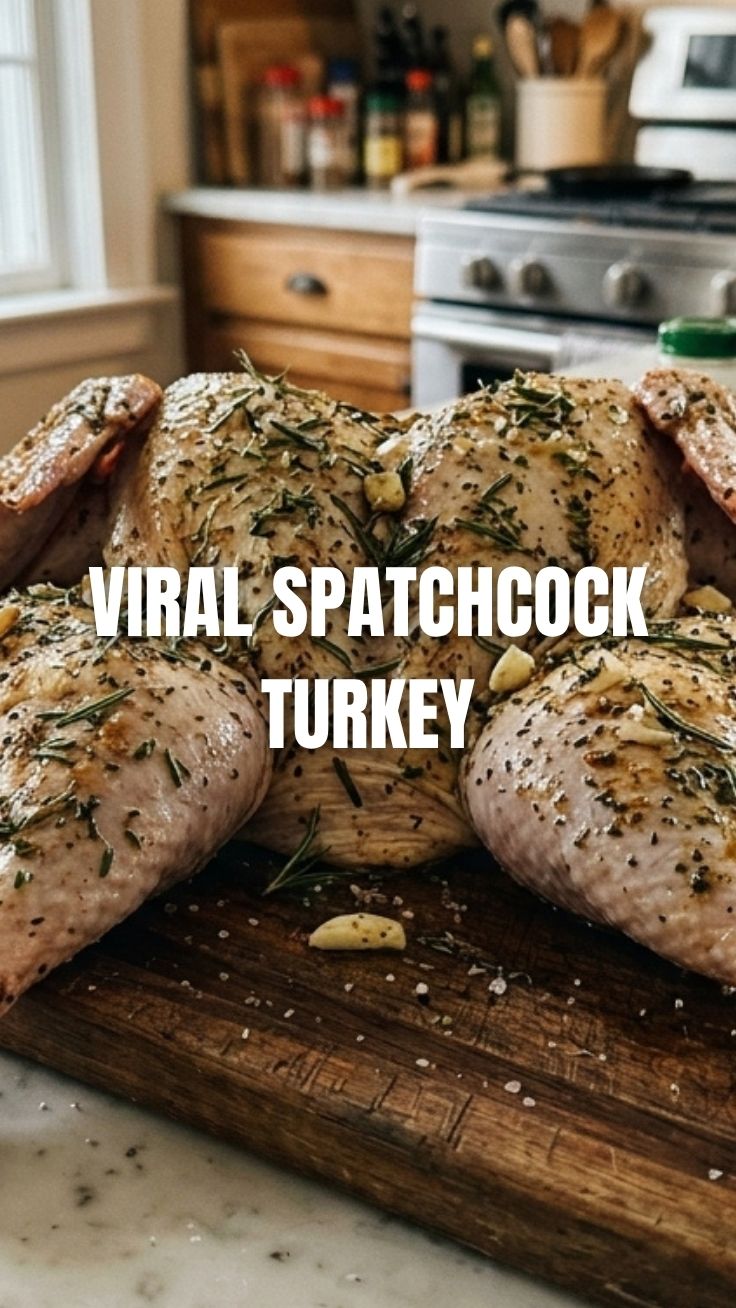
2. Spatchcocking: Place the turkey breast-side down on a large cutting board. Using heavy-duty kitchen shears, cut along both sides of the backbone from the tail to the neck. Remove the backbone (save for stock!). Flip the turkey over, breast-side up. Press firmly on the breastbone until you hear a crack, flattening the bird. This technique makes all the difference for a beautifully cooked Spatchcock Turkey.
3. Seasoning: In a small bowl, combine salt, pepper, garlic powder, onion powder, and smoked paprika (if using). Rub the turkey all over with olive oil, then generously pat the seasoning blend onto the entire surface, under the skin of the breast, and into crevices.
4. Roast: Preheat your oven to 425°F (220°C). Place the flattened turkey on a V-rack set inside a roasting pan. If using aromatics, spread them around the bottom of the pan. Roast for 30 minutes at 425°F (220°C) to get a head start on browning.
5. Lower Temperature and Finish: Reduce oven temperature to 375°F (190°C). Continue roasting for an additional 60-90 minutes, or until a meat thermometer inserted into the thickest part of the thigh (without touching bone) reads 165°F (74°C). If you’ve opted for a brined turkey, monitor closely as brining can slightly reduce cooking time. The breast meat should also register 160-165°F (71-74°C).
6. Rest: Transfer the turkey to a large cutting board and tent loosely with foil. Let it rest for 20-30 minutes before carving. This allows juices to redistribute, ensuring a tender and remarkably moist result.
Nutritional Benefits & Advantages
Turkey is a lean protein powerhouse, offering a significant source of essential amino acids critical for muscle repair and growth. It’s also packed with B vitamins (B3, B6, B12), selenium, and zinc, all vital for energy metabolism, immune function, and overall health. The spatchcocking method, by allowing for even cooking, prevents the breast from drying out while the dark meat cooks through, preserving more of those delicate nutrients and natural moisture. Plus, with crispy skin and juicy meat, you’re less likely to pile on heavy gravies, allowing the turkey’s natural goodness to shine.
Tips, Variations & Cooking Advice
- Flavor Variations: Experiment with different herb blends! Sage, thyme, rosemary, and marjoram are classic turkey partners. For a zesty kick, add lemon zest to your seasoning mix.
- Compound Butter: Mix softened butter with fresh herbs, garlic, and salt, then rub it under the skin before roasting for incredibly moist and flavorful breast meat.
- Basting (Optional): While spatchcocking reduces the need for constant basting, you can occasionally brush with pan drippings for extra flavor and shine. Be quick to prevent heat loss.
- Dietary Adaptations: This recipe is naturally gluten-free and dairy-free as long as you avoid butter in your seasoning. Always check ingredients in packaged seasonings.
- Broth in Pan: Adding a cup or two of chicken or vegetable broth to the bottom of the roasting pan with the aromatics will help create delicious drippings for gravy and keep the kitchen smelling fantastic.
Common Mistakes to Avoid
- Not Patting Dry: A wet turkey skin will steam, not crisp. Pat, pat, pat!
- Skipping the Rest: Resting is non-negotiable. Cutting into the turkey too soon will result in juices flowing out, leading to dry meat.
- Overcooking: The biggest turkey sin! Use a reliable meat thermometer and pull the turkey when it hits the target temperature, remembering it will continue to cook slightly while resting.
- Using a Small Roasting Pan: Crowding the turkey prevents proper air circulation, leading to uneven cooking and less crispy skin.
- Ignoring Room Temperature: Starting with a fridge-cold bird prolongs cooking time and can lead to unevenly cooked sections.
Storage & Meal Prep Tips
Leftover Spatchcock Turkey is a gift that keeps on giving! Store carved turkey meat in airtight containers in the refrigerator for up to 3-4 days. For longer storage, freeze portions in freezer-safe bags or containers for up to 2-3 months. To reheat, gently warm in the oven at 300°F (150°C) with a splash of broth to prevent drying, or microwave briefly. Leftover turkey is fantastic in sandwiches, salads, stir-fries, or even turkey pot pie!
Conclusion
Mastering the art of the Spatchcock Turkey is a game-changer for any home cook, guaranteeing a spectacularly juicy and flavorful bird every single time. By leveraging this simple yet effective technique, along with the optional enhancement of a brined turkey, you’re set to impress with a meal that’s both delicious and surprisingly straightforward to prepare. We encourage you to try this method for your next roast; you’ll wonder why you ever cooked turkey any other way. Share your culinary triumphs and tag us in your beautiful turkey creations!
FAQs
1. Why spatchcock a turkey? Spatchcocking flattens the bird, allowing for more even cooking, faster cooking times, and incredibly crispy skin across the entire surface, preventing the breast from drying out while the dark meat cooks through.
2. Can I spatchcock a frozen turkey? No, the turkey must be fully thawed before spatchcocking. Attempting to cut through partially frozen bone is dangerous and difficult.
3. What can I do with the backbone? Don’t discard it! The backbone is packed with flavor and is excellent for making homemade turkey stock, which you can use for gravies, soups, or risottos.
4. How do I prevent the breast from over-browning? If the breast skin is browning too quickly, you can loosely tent that area with aluminum foil during the later stages of roasting.
5. Is brining really necessary? While not strictly necessary for a spatchcocked turkey (which is already moisture-retaining), a brined turkey adds an extra layer of flavor and ensures deep moisture penetration, making it even more succulent. It’s an optional step for a truly exceptional result.