Unlock the Secret to Restaurant-Quality French Onion Soup at Home
Ever wondered how to capture that soul-warming, deeply flavorful essence of a classic bistro French Onion Soup right in your own kitchen? Many perceive this iconic dish as intimidating, reserved only for professional chefs. But what if I told you that with a few simple techniques and readily available ingredients, you could create a bowl so exquisite it rivals any restaurant’s? Forget the bland, watery versions; we’re diving deep into the art of making an authentic French Onion Soup that will impress even the most discerning palates. And for those who love those rich, savory flavors in a different format, we’ll also touch upon the delightful world of French onion dip – perfect for parties or a quick snack!
Ingredients & Kitchen Tools
To embark on this culinary journey, gather the following:
Ingredients:
- 5-6 large yellow onions (about 3 lbs): The star of the show. Yellow onions caramelize beautifully and provide the essential sweetness.
- 4 tablespoons unsalted butter: Adds richness and aids in caramelization.
- 2 tablespoons olive oil: Prevents butter from burning at higher heats.
- 1 teaspoon granulated sugar (optional): A tiny boost to kickstart caramelization, especially if your onions aren’t particularly sweet.
- 1 teaspoon salt: Essential for seasoning and drawing out moisture from the onions.
- ½ teaspoon freshly ground black pepper: For a touch of warmth and spice.
- 8 cups beef broth or stock (homemade is best): The foundation of the soup’s robust flavor. Look for low-sodium options if using store-bought.
- ½ cup dry white wine (e.g., Sauvignon Blanc, Pinot Grigio): Adds a layer of acidity and complexity, deglazing the pan.
- 2 tablespoons all-purpose flour: Helps to thicken the soup slightly and create a richer mouthfeel (roux).
- 1 bay leaf: Infuses an aromatic depth.
- 2 sprigs fresh thyme: Another aromatic herb that complements the onions wonderfully.
- ½ cup cognac or brandy (optional): A splash at the end for an extra layer of gourmet flavor.
- 1 baguette: Sliced into ½-inch thick rounds, destined to become crispy croutons.
- 8 oz Gruyère cheese: The classic choice for its nutty, melty qualities. Shredded for even melting.
- 2 oz Provolone cheese (optional): Can be mixed with Gruyère for a slightly milder, stretchier topping.
Kitchen Tools:
- Large heavy-bottomed Dutch oven or stockpot: Essential for even heat distribution during caramelization.
- Sharp chef’s knife: For precise and efficient onion slicing.
- Cutting board: A stable surface for chopping.
- Wooden spoon or heat-resistant spatula: For stirring the onions.
- Ladle: For serving the soup.
- Oven-safe crocks or bowls: For individual servings and broiling the cheesy topping.
- Baking sheet: For toasting baguette slices.
- Grater: For shredding cheese.
Prep Time & Cooking Schedule
- Prep Time: 20-30 minutes (mostly for slicing onions, which can be done in advance).
- Active Cooking Time: 2 hours (primarily for caramelizing onions, which requires patience).
- Simmering Time: 30 minutes
- Broiling Time: 5-7 minutes
This French Onion Soup is a labor of love that rewards patience. Plan for a leisurely afternoon or an evening when you can dedicate time to the caramelization process. The aroma alone is worth it!
Step-by-Step Instructions
1. Prepare the Onions: Peel and thinly slice the onions. Aim for uniform slices, about 1/8 to 1/4 inch thick, for even cooking.
2. Caramelize the Onions: In your large Dutch oven or stockpot, melt butter and olive oil over medium-low heat. Add the sliced onions, sugar (if using), and salt. Stir well to coat. Cook patiently for 45-60 minutes, stirring occasionally at first, then more frequently as the onions soften and start to brown. The key is low heat and slow cooking to achieve deep, rich caramelization – not just browning. The onions should be a deep golden-brown, almost mahogany, and significantly reduced in volume. This step is crucial for the authentic flavor of French Onion Soup.
3. Deglaze: Once onions are perfectly caramelized, sprinkle the flour over them and stir for 1 minute. Pour in the dry white wine, scraping up any browned bits from the bottom of the pot. Simmer until the wine has almost evaporated.
4. Add Liquids & Aromatics: Pour in the beef broth, add the bay leaf and thyme sprigs. Bring to a simmer, then reduce heat to low, cover, and cook for at least 30 minutes for flavors to meld.
5. Finish the Soup: Remove the bay leaf and thyme sprigs. Stir in the cognac or brandy (if using). Season with black pepper and adjust salt to taste.
6. Prepare Croutons & Cheese: While the soup simmers, preheat your oven to 375°F (190°C). Arrange baguette slices on a baking sheet and bake for 8-10 minutes, or until lightly golden and toasted. Shred both Gruyère and Provolone cheeses.
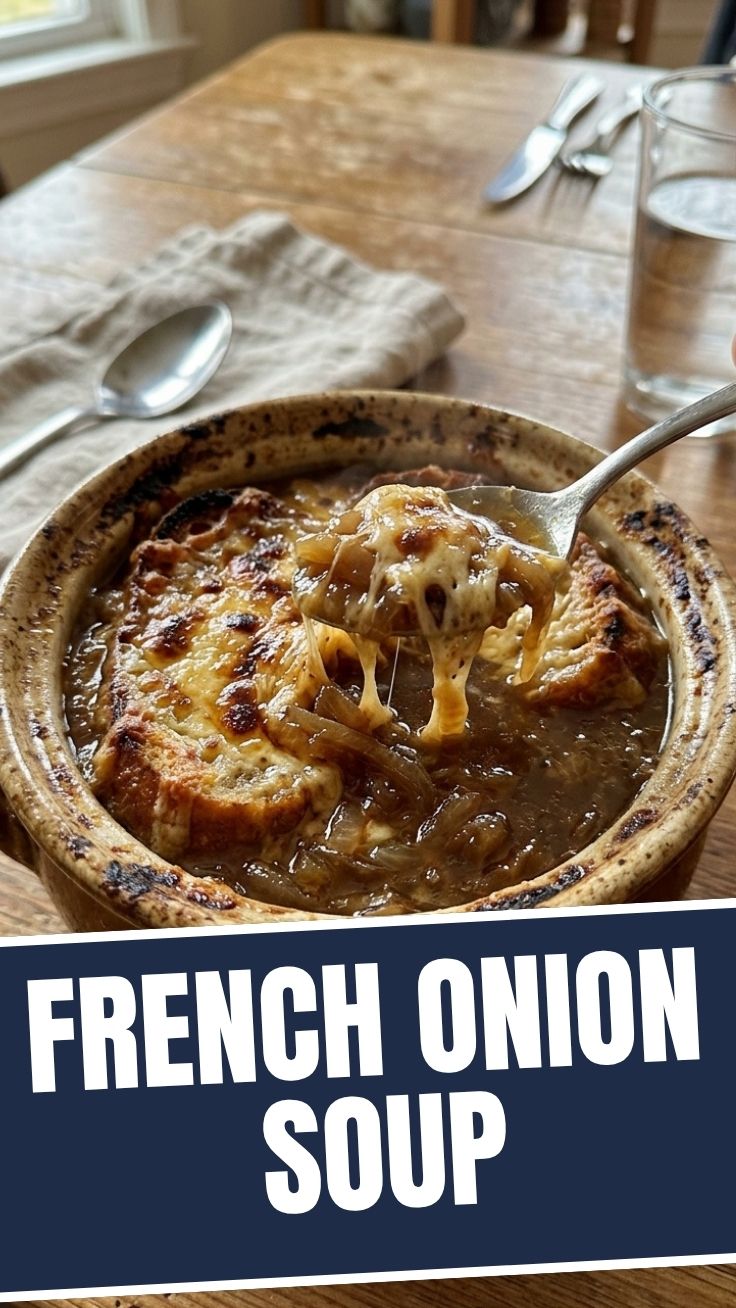
7. Assemble & Broil: Ladle the hot soup into oven-safe crocks. Float a toasted baguette slice on top of each bowl. Generously cover the crouton and soup’s surface with shredded cheese. Place bowls on a baking sheet (to catch any spills). Broil on high for 3-5 minutes, watching carefully, until the cheese is bubbly, golden brown, and delightfully gooey. Serve immediately. This method also works for those seeking the cheesy goodness found on a good French onion dip, making it equally versatile.
Nutritional Benefits & Advantages
Beyond its incredible taste, homemade French Onion Soup offers several advantages. Onions are rich in antioxidants and prebiotics, supporting gut health. Beef broth (especially homemade bone broth) is a good source of collagen, amino acids, and minerals, beneficial for joint health and skin. While it’s certainly a comforting and rich dish, making it from scratch allows you to control sodium levels and choose high-quality ingredients, avoiding artificial additives often found in store-bought versions.
Tips, Variations & Cooking Advice
- Onion Variety: While yellow onions are traditional, you can experiment with a mix of yellow and sweet onions (like Vidalia) for a slightly different sweetness profile.
- Vegetarian Version: Substitute vegetable broth for beef broth and vegan butter for regular butter. Omit the brandy if not plant-based.
- Gluten-Free: Use a gluten-free all-purpose flour blend or thicken with a cornstarch slurry (1 tbsp cornstarch mixed with 2 tbsp cold water) added at the end of simmering. Ensure your beef broth is gluten-free.
- Cheese Choice: While Gruyère is classic, other good melting cheeses include Emmental, Comté, or even a blend with mozzarella for extra stretch.
- Wine Alternatives: If you prefer not to use wine, you can substitute with an equal amount of additional beef broth and a splash of sherry vinegar or balsamic vinegar at the end for acidity.
- Flavor Boost: For an even deeper flavor, roast a few beef bones with some vegetables before making your broth.
Common Mistakes to Avoid
- Rushing Caramelization: This is the most crucial step! Do not rush the onions. High heat will burn them, resulting in bitterness instead of sweetness. Low and slow is the mantra here.
- Not Enough Salt: Onions need salt to help them release moisture and caramelize properly. Don’t be shy with the initial seasoning.
- Over-Thickening: French Onion Soup should be brothy with a slight body, not thick and gloopy. The flour adds just a subtle richness.
- Broiling Too Long (or too short): Keep a close eye on the broiler. Cheese can go from perfectly golden to burnt in seconds. Conversely, not enough broiling means no glorious cheese pull!
Storage & Meal Prep Tips
Leftover French Onion Soup (without the cheese topping or croutons) can be stored in an airtight container in the refrigerator for up to 3-4 days. It actually tastes even better the next day as the flavors continue to meld.
- Freezing: The soup base freezes beautifully for up to 3 months. Thaw overnight in the refrigerator and reheat gently on the stove. Add fresh croutons and cheese before broiling for serving.
- Reheating: Reheat gently on the stovetop. Prepare fresh baguette slices and cheese when ready to serve and broil individually. Do not reheat the soup with the cheese topping already on it, as the cheese will become rubbery.
Conclusion
Crafting a truly exceptional French Onion Soup is a rewarding culinary achievement that brings the warmth and sophistication of a classic bistro directly to your table. The patience required for perfectly caramelized onions pays dividends in every rich, savory spoonful, layered with the delightful tang of wine and topped with gooey, bubbly cheese. Whether you’re planning an elegant dinner or simply seeking a comforting meal, this recipe empowers you to create magic. And for those moments when you crave that irresistible oniony goodness in a different form, remember the versatility of those caramelized onions, which are also the secret to an outstanding French onion dip. Don’t hesitate – give this recipe a try, share your delicious results in the comments below, and prepare to be amazed by your own culinary prowess!
FAQs
Q1: Can I make this soup ahead of time?
A1: Absolutely! The soup base can be made 1-2 days in advance and refrigerated. The flavors often deepen overnight. Prepare the croutons and broil the cheese topping just before serving.
Q2: What if my onions aren’t caramelizing properly?
A2: The most common reason is heat that’s too high. Reduce the heat to low, add a tablespoon of water or beef broth if they’re sticking, and continue stirring. Patience is key; it can take up to an hour or more for a rich, deep caramelization.
Q3: Can I use different types of bread for the croutons?
A3: Yes, while baguette is traditional, you can use other crusty breads like sourdough or even rustic white bread. Just ensure they are sturdy enough to absorb some soup without falling apart too quickly and toast them well.
Q4: My soup tastes a bit bland. How can I fix it?
A4: Ensure you’ve salted the onions adequately during caramelization. Taste before serving and adjust seasoning with more salt and pepper as needed. A splash of sherry vinegar or a touch more brandy at the end can also brighten flavors.
Q5: What’s the secret to perfectly melted cheese without burning?
A5: Use oven-safe crocks and place them relatively close to the broiler element, but not too close. Watch constantly – the cheese can bubble and brown quickly. For best results, use freshly grated cheese, which melts more evenly than pre-shredded varieties.