Master the Art of Homemade Falafel: Crispy, Flavorful, and Unforgettable
Do you ever crave that perfectly crispy, aromatic Falafel (Homemade), bursting with herby goodness, but hesitate to make it from scratch? Preparing this Middle Eastern staple at home isn’t just about saving money; it’s about unlocking fresher flavors, controlling ingredients, and experiencing the satisfying craft of transforming humble Chickpea into a culinary masterpiece. This comprehensive guide will walk you through every step to create the most delicious homemade falafel you’ve ever tasted, ensuring a delightful culinary adventure for your palate.
Ingredients & Kitchen Tools
To embark on your falafel journey, gather these essential items:
- Dried Chickpeas (Garbanzo Beans): 1 cup. Absolutely crucial for the right texture; canned chickpeas are too wet.
- Fresh Parsley: 1/2 cup, packed. Adds vibrant color and fresh, herbaceous flavor.
- Fresh Cilantro: 1/2 cup, packed. Contributes a bright, citrusy note.
- Onion: 1/2 medium, roughly chopped. Provides aromatic depth.
- Garlic: 4-5 cloves, peeled. For pungent flavor.
- All-Purpose Flour or Chickpea Flour: 2 tablespoons. Helps bind the mixture (use chickpea flour for gluten-free).
- Baking Powder: 1 teaspoon. Contributes to a lighter, airier falafel.
- Cumin: 1 teaspoon, ground. Essential warming spice.
- Coriander: 1 teaspoon, ground. Earthy and aromatic.
- Salt: 1 teaspoon, or to taste. Enhances all flavors.
- Black Pepper: 1/2 teaspoon, freshly ground. A touch of heat.
- Cayenne Pepper (Optional): 1/4 teaspoon. For a subtle kick.
- Vegetable Oil (or other neutral oil like Canola, Sunflower): For frying.
- Food Processor: Essential for achieving the right texture.
- Large Bowl: For soaking chickpeas and mixing.
- Deep Pot or Dutch Oven: For frying.
- Slotted Spoon or Spider: For safely removing falafel from oil.
- Baking Sheet lined with Paper Towels: For draining excess oil.
- Falafel Scoop (Optional): Creates perfectly uniform falafel balls.
Prep Time & Cooking Schedule
- Chickpea Soaking Time: 12-18 hours (or overnight). This is non-negotiable for tender, yet firm, falafel. Start this process the day before you plan to cook.
- Active Prep Time: 20-25 minutes. This includes chopping herbs, onions, and processing the mixture.
- Resting Time (Optional but Recommended): 30 minutes in the refrigerator. Allows flavors to meld and the mixture to firm up slightly, making it easier to form.
- Cooking Time: 3-5 minutes per batch (frying). Total cooking time varies based on batch size.
Remember to plan ahead for the long chickpea soak. This crucial step rehydrates the garbanzo beans, giving your falafel that classic fluffy-on-the-inside, crispy-on-the-outside texture.
Step-by-Step Instructions
1. Soak the Chickpeas: Place the 1 cup of dried Chickpea in a large bowl and cover with at least 3-4 inches of cold water. They will expand significantly. Soak for 12-18 hours, or overnight, changing the water once if possible.
2. Drain Thoroughly: Drain the soaked chickpeas completely. Ensure they are as dry as possible – excess moisture can lead to crumbly falafel.
3. Process the Mixture: In your food processor, combine the drained chickpeas, fresh parsley, fresh cilantro, chopped onion, and garlic cloves. Pulse mixture until it’s finely chopped but not a paste. You should still see small pieces of the chickpeas and herbs; this texture is key for a good Falafel (Homemade). Avoid over-processing, which can result in dense falafel.
4. Add Dry Ingredients: Transfer the mixture to a large bowl. Stir in the flour (or chickpea flour), baking powder, ground cumin, ground coriander, salt, black pepper, and optional cayenne pepper. Mix thoroughly until everything is well combined.
5. Rest the Mixture (Optional): Cover the bowl and refrigerate for 30 minutes. This helps the flavors meld and makes the mixture easier to handle when forming.
6. Shape the Falafel: Heat about 2-3 inches of vegetable oil in a deep pot or Dutch oven to 350°F (175°C). While the oil heats, form the falafel mixture into small balls or patties, about 1-inch in diameter, using your hands or a falafel scoop. Do not pack them too tightly.
7. Fry the Falafel: Carefully lower a few falafel into the hot oil, ensuring not to overcrowd the pot. Fry for 3-5 minutes, turning occasionally, until they are golden brown and crispy on all sides.
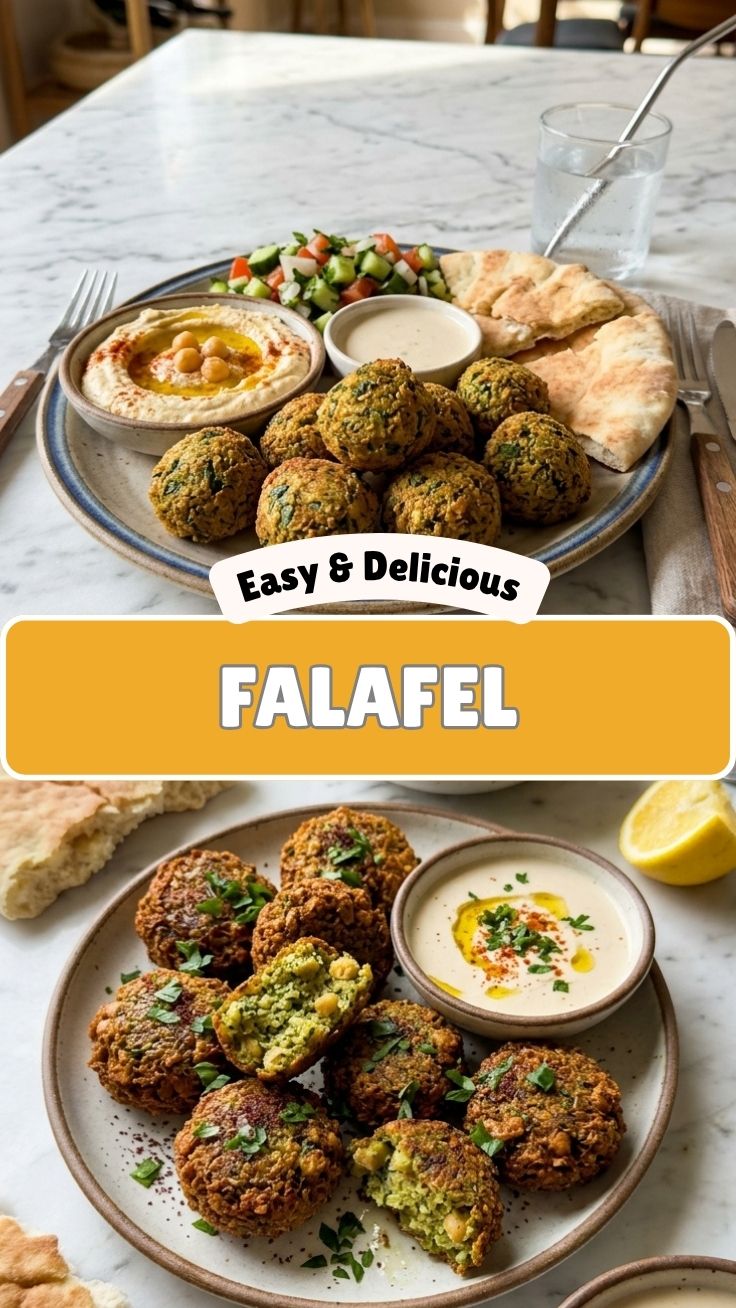
8. Drain and Serve: Remove the cooked falafel with a slotted spoon and place them on the paper towel-lined baking sheet to drain excess oil. Serve immediately with tahini sauce, pita bread, salad, or your favorite accompaniments.
Nutritional Benefits & Advantages
Falafel offers an excellent source of plant-based protein and dietary fiber, primarily from the chickpeas. It’s also rich in vitamins and minerals like folate, iron, magnesium, and B vitamins. The generous use of fresh herbs like parsley and cilantro provides antioxidants and various health-promoting compounds. When homemade, you control the quality of oil and amount of salt, making it a healthier alternative to store-bought or restaurant versions that might be heavy on unhealthy fats.
Tips, Variations & Cooking Advice
- Spice it up: Add a pinch more cayenne or a dash of sumac for brighter flavor.
- Green Falafel: Increase the amount of parsley and cilantro for an even greener and herbier falafel.
- Baking/Air Frying Option: For a lighter version, bake at 375°F (190°C) for 20-25 minutes, flipping halfway, or air fry at 350°F (175°C) for 15-20 minutes until golden brown. They won’t be as crispy as fried but are still delicious.
- Gluten-Free: Ensure you use chickpea flour instead of all-purpose flour.
- Use a Food Processor: It’s critical for achieving the right fine, but not pasty, texture. A blender may over-process.
Common Mistakes to Avoid
- Using Canned Chickpeas: They contain too much moisture and will result in soggy, mushy falafel that won’t hold its shape or get crispy. Always use dried, soaked chickpeas.
- Over-processing: Blending the mixture into a smooth paste will make the falafel dense and gluey instead of light and airy.
- Not Draining Chickpeas Properly: Residual water makes the mixture too wet, leading to crumbly falafel.
- Overcrowding the Pot: This lowers the oil temperature, resulting in greasy rather than crispy falafel. Fry in batches.
- Oil Temperature Too Low: Falafel will absorb too much oil and be soggy.
- Oil Temperature Too High: Falafel will burn on the outside before cooking through.
Storage & Meal Prep Tips
Leftover falafel can be stored in an airtight container in the refrigerator for up to 3-4 days. To maintain texture and flavor, reheat in an oven or air fryer until warmed through and crispy again (about 10-15 minutes at 350°F/175°C). You can also freeze uncooked falafel patties/balls on a baking sheet until solid, then transfer to a freezer bag for up to 2-3 months. Fry directly from frozen, adding a couple of minutes to the cooking time. Cooked falafel can also be frozen for similar duration; reheat as directed above.
Conclusion
Mastering homemade falafel is a truly rewarding culinary experience. By carefully soaking your Chickpea and following these steps, you’ll achieve that irresistible crispy exterior and tender, herb-packed interior. This guide ensures your Falafel (Homemade) will not only be delicious but also a healthier, fresher alternative to store-bought options. Don’t be shy – try this recipe tonight and let us know your favorite way to serve these golden delights in the comments below!
FAQs
Q1: Can I make the falafel mixture ahead of time?
A1: Yes, you can prepare the falafel mixture and store it in an airtight container in the refrigerator for up to 24 hours before frying. This allows the flavors to deepen.
Q2: What can I do if my falafel mixture is too wet or too dry?
A2: If too wet, add a tablespoon or two of chickpea flour until it’s easier to handle without being sticky. If too dry, add a tiny bit of water (1 teaspoon at a time) and re-pulse until it comes together.
Q3: What’s the best oil for frying falafel?
A3: A neutral, high-smoke-point oil like vegetable, canola, sunflower, or grapeseed oil is best. Olive oil has too low a smoke point and will impart a strong flavor.
Q4: How do I know when the falafel is cooked through?
A4: Falafel should be uniformly golden brown and crispy on the outside. If you break one open, the inside should be light green from the herbs and fully cooked.
Q5: Can I substitute dried herbs for fresh ones?
A5: While possible, fresh herbs are highly recommended for authentic flavor and texture. If absolutely necessary, use 1/3 the amount of dried herbs (e.g., 1/3 cup dried parsley/cilantro for 1 cup fresh).