From Our Kitchen to Yours: Mastering the Art of Savory Chicken Cacciatore
Are you ready to elevate your home cooking and bring the rustic charm of Italy right to your dinner table? Forget takeout and bland weeknight meals – today, we’re diving deep into the art of making a truly exceptional Chicken Cacciatore. There’s something incredibly rewarding about creating a robust, flavorful dish from scratch, one that fills your home with tantalizing aromas and delights every palate. This classic stew, brimming with tender chicken, vibrant vegetables, and a rich tomato sauce, is more than just a meal; it’s an experience. Perfecting classic Italian chicken recipes like this not only impresses your family and friends but also grants you a deeper appreciation for culinary traditions. Let’s embark on this delicious journey together!
Ingredients & Kitchen Tools
To embark on your Chicken Cacciatore adventure, gather these high-quality ingredients and essential kitchen tools:
Ingredients:
- 2-3 lbs Bone-in, Skin-on Chicken Thighs and/or Drumsticks: (About 6-8 pieces) Bone-in pieces offer more flavor and tend to stay juicier. Skin can be removed for a lighter dish.
- 2 tbsp Olive Oil: Extra virgin preferred for its rich flavor, but regular olive oil works too.
- 1 Large Onion: (Yellow or White) Chopped, forms the aromatic base.
- 2-3 Cloves Garlic: Minced, provides a pungent, savory depth.
- 1 Green Bell Pepper: (Or yellow/red for color variation) Seeded and chopped into 1-inch pieces, adds sweetness and a slight crunch.
- 1 Red Bell Pepper: (Optional, for extra color and sweetness) Seeded and chopped.
- 1 pint Cherry Tomatoes: Halved, for bursts of fresh acidity and sweetness, or 1 (14.5 oz) can diced tomatoes if fresh aren’t available.
- 1 (28 oz) can Crushed Tomatoes: The heart of the sauce, providing body and rich tomato flavor.
- 1/2 cup Dry White Wine: (Such as Pinot Grigio or Sauvignon Blanc) Adds depth and acidity; can be substituted with chicken broth for an alcohol-free version.
- 1/2 cup Chicken Broth: (Low sodium preferred) To thin the sauce and add savory notes.
- 1 tsp Dried Oregano: Classic Italian herb, aromatic and earthy.
- 1/2 tsp Dried Thyme: Complements the oregano with its subtle, savory complexity.
- 1/4 cup Fresh Parsley: Chopped, for garnish and a fresh, herbaceous finish.
- Salt and Freshly Ground Black Pepper: To taste, essential for seasoning.
- Optional: 1/2 cup Sliced Mushrooms: (Cremini or button) For an added earthy dimension.
- Optional: Pinch of Red Pepper Flakes: For a hint of heat.
Kitchen Tools:
- Large Dutch Oven or a Deep, Heavy-Bottomed Pot: Ideal for browning chicken and slow simmering.
- Cutting Board & Chef’s Knife: For preparing vegetables and chicken.
- Measuring Cups & Spoons: For accurate ingredient measurement.
- Tongs & Slotted Spoon: For handling chicken and stirring.
- Wooden Spoon or Spatula: For sautéing and stirring.
Prep Time & Cooking Schedule
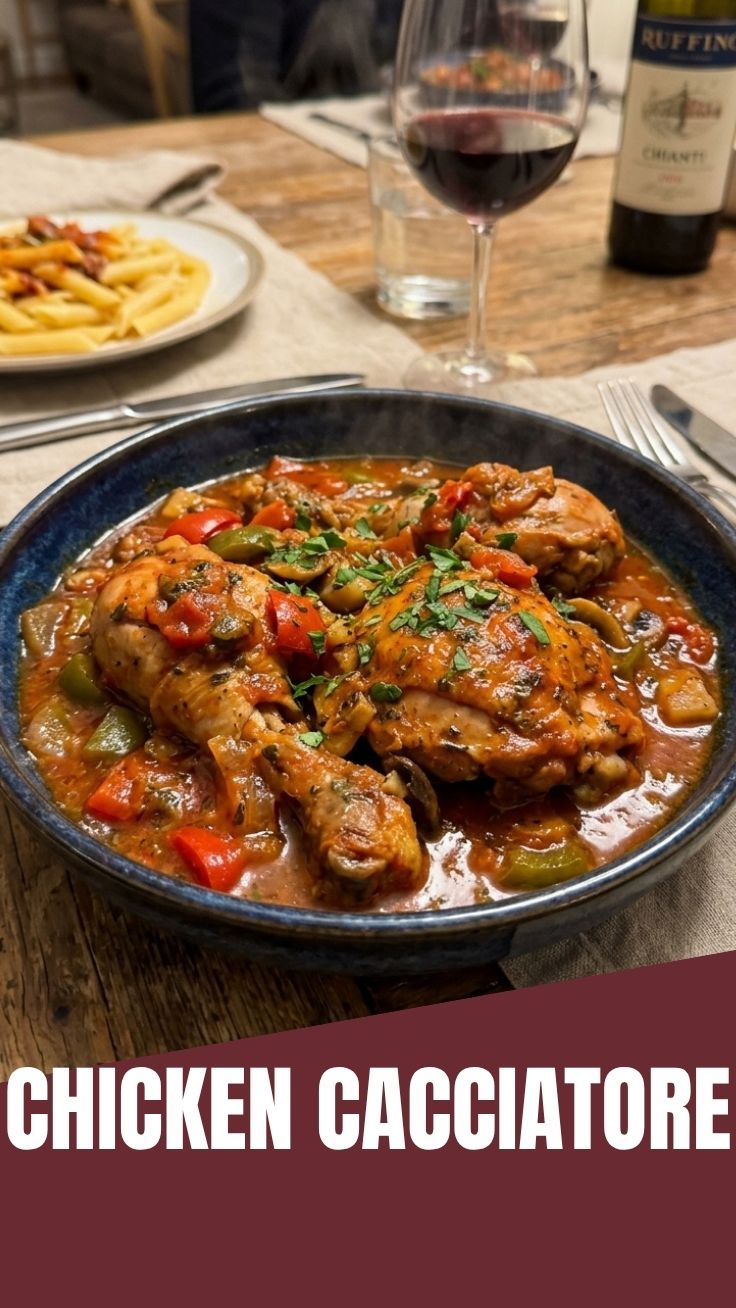
- Prep Time: 20-25 minutes (includes chopping vegetables and seasoning chicken)
- Cook Time: 45-60 minutes (browning chicken, sautéing aromatics, simmering the sauce)
- Resting Time: 5-10 minutes (after cooking, allows flavors to meld and chicken to reabsorb juices)
This dish is quite flexible. You can pre-chop your vegetables a day ahead to cut down on prep time. The beauty of a dish like Chicken Cacciatore is that it actually tastes even better the next day as the flavors deepen and meld, making it an excellent candidate for meal prepping or entertaining. Plan about an hour and a half from start to finish for a truly relaxed cooking experience.
Step-by-Step Instructions
1. Prepare the Chicken: Pat chicken pieces dry with paper towels. Season generously with salt and black pepper. This crucial step ensures a crispy skin and well-flavored meat.
2. Sear the Chicken: Heat olive oil in a large Dutch oven or heavy-bottomed pot over medium-high heat. Once shimmering, add chicken pieces, skin-side down (if applicable), and sear for 5-7 minutes until deeply golden brown and crispy. Flip and sear for another 3-4 minutes. Remove chicken from the pot and set aside, leaving the rendered fat in the pot.
3. Sauté Aromatics: Reduce heat to medium. Add chopped onion and bell peppers to the pot. Sauté for 5-7 minutes until softened, scraping up any browned bits from the bottom of the pot (this adds immense flavor!). Add minced garlic and optional mushrooms (if using), and cook for another 2 minutes until fragrant.
4. Deglaze and Build the Sauce: Pour in the white wine (or chicken broth) and deglaze the pot, scraping up any remaining browned bits. Simmer for 2-3 minutes until the liquid has reduced slightly.
5. Add Tomatoes and Herbs: Stir in the cherry tomatoes, crushed tomatoes, chicken broth, dried oregano, and dried thyme. Season with a pinch of red pepper flakes (if desired), salt, and black pepper. Bring the sauce to a gentle simmer.
6. Return Chicken and Simmer: CarefullyNest the seared chicken pieces back into the sauce. Ensure they are partially submerged. Bring the sauce back to a gentle simmer, then reduce heat to low, cover the pot, and cook for 30-40 minutes, or until the chicken is cooked through and tender (internal temperature of 165°F/74°C). The long, slow simmer is key to a fall-off-the-bone tender Chicken Cacciatore.
7. Finish and Serve: Remove from heat. Stir in fresh chopped parsley. Let the dish rest for 5-10 minutes before serving. This allows the juices to redistribute, resulting in more succulent chicken. Serve hot, perhaps with crusty bread, polenta, or pasta to soak up the glorious sauce. This is one of those Italian chicken recipes that truly shines after a good simmer.
Nutritional Benefits & Advantages
Chicken Cacciatore is not just delicious; it’s also packed with nutritional goodness. Chicken is an excellent source of lean protein, essential for muscle repair and growth. The abundance of vegetables like bell peppers, onions, and tomatoes provides a wealth of vitamins (especially Vitamin C from bell peppers and tomatoes), minerals, and powerful antioxidants. Tomatoes, in particular, are rich in lycopene, an antioxidant linked to heart health benefits. Cooked in olive oil, the dish also incorporates healthy monounsaturated fats. This well-rounded meal makes a wholesome addition to any diet.
Tips, Variations & Cooking Advice
- Spice It Up: Add a whole dried chili or extra red pepper flakes for a spicier kick.
- Vegetable Boost: Feel free to add other quick-cooking vegetables like zucchini, carrots (diced finely), or olives during the last 15 minutes of simmering.
- Herb Power: Experiment with fresh rosemary or bay leaves for different aromatic profiles.
- Alternative Cuts: While bone-in, skin-on chicken is recommended for flavor, you can use boneless, skinless thighs or breasts. Adjust cooking time accordingly; boneless breasts will cook faster.
- Slow Cooker Adaptation: Sear chicken and sauté vegetables as directed. Transfer everything to a slow cooker and cook on low for 4-6 hours or high for 2-3 hours.
- Thicker Sauce: If your sauce is too thin, uncover the pot for the last 10-15 minutes of cooking. If it’s too thick, add a splash more chicken broth.
Common Mistakes to Avoid
- Overcrowding the Pot: When searing chicken, work in batches if necessary. Overcrowding lowers the temperature and steams the chicken instead of browning it, preventing that crucial crispy skin and deep flavor.
- Not Patting Chicken Dry: Moisture on the chicken skin prevents it from browning properly, leading to a less flavorful result.
- Skipping the Deglazing: Those browned bits at the bottom of the pot (fond) are flavor gold. Don’t leave them behind! Deglazing with wine or broth adds significant depth to your sauce.
- Undercooked or Overcooked Chicken: Ensure chicken reaches 165°F (74°C) internal temperature. Overcooking can lead to dry, stringy chicken, especially if using breasts. A meat thermometer is your best friend.
- Lack of Seasoning: Taste and adjust seasoning at various stages, especially after adding tomatoes to ensure a well-balanced flavor profile.
Storage & Meal Prep Tips
Leftover Chicken Cacciatore is fantastic! Store cooled leftovers in airtight containers in the refrigerator for up to 3-4 days. This dish also freezes exceptionally well. For best results, freeze in individual portions for easy reheating. It can be frozen for up to 3 months. Thaw overnight in the refrigerator and reheat gently on the stovetop over low heat, adding a splash of broth if needed, or in the microwave until heated through. The flavors truly deepen, making it an ideal candidate for meal prepping weeknight dinners.
Conclusion
Congratulations, you’ve now mastered the art of making a delectable Chicken Cacciatore! This robust, flavorful dish is a testament to the timeless appeal of classic Italian chicken recipes. We hope this guide empowers you to bring authentic, hearty flavors into your home kitchen with confidence and joy. Don’t be afraid to make it your own, experimenting with variations and enjoying the process. We encourage you to try this recipe, share your creations with us, and savor every bite of this truly satisfying meal. Happy cooking!
FAQs
Q1: Can I use boneless chicken for this recipe?
A1: Yes, you can. Boneless, skinless chicken thighs are a great alternative and will cook slightly faster. Boneless, skinless breasts can also be used, but be careful not to overcook them, as they can dry out easily.
Q2: What can I substitute for white wine?
A2: If you prefer not to use alcohol, you can substitute the white wine with an equal amount of chicken broth. A splash of red wine vinegar can also add a hint of acidity, if desired.
Q3: How can I make the sauce thicker?
A3: If your sauce is too thin, simply remove the chicken from the pot and let the sauce simmer, uncovered, for an additional 10-15 minutes over medium heat until it reduces to your desired consistency.
Q4: Can I prepare this dish ahead of time?
A4: Absolutely! Chicken Cacciatore tastes even better the next day as the flavors have more time to meld. Simply prepare it as directed, let it cool completely, then store it in an airtight container in the refrigerator. Reheat gently on the stovetop or in the oven.
Q5: What are the best side dishes to serve with Chicken Cacciatore?
A5: This dish pairs wonderfully with crusty bread (for soaking up the sauce!), creamy polenta, pasta (like tagliatelle or pappardelle), or a light green salad. Rice or mashed potatoes are also excellent options.