Master the Art of Gourmet Candy Apples and Caramel Apples at Home!
Ever wondered how those vibrant, glossy Candy Apples or delightfully chewy caramel apples come to life? Beyond the allure of the carnival stand, crafting these classic treats in your own kitchen offers an unparalleled sense of satisfaction and allows for endless customization. Imagine biting into a perfectly crisp apple encased in a shimmering, sweet shell – a world away from pre-packaged versions. This comprehensive guide will empower you to create show-stopping Candy Apples that will impress everyone, from children to connoisseurs. We’ll delve into the science of sugar coatings and the art of apple preparation, ensuring your homemade confections are not just delicious but also visually stunning.
Ingredients & Kitchen Tools
To embark on your sweet apple adventure, gather these essentials:
- Apples (6-8 medium, firm variety like Granny Smith or Honeycrisp): Crucial for that satisfying crunch under the sweet coating. Tart apples perfectly balance the sweetness.
- Granulated Sugar (4 cups): The backbone of your candy coating, providing sweetness and structure.
- Light Corn Syrup (1 cup): Prevents crystallization, ensuring a smooth, glossy finish for your Candy Apples.
- Water (1 cup): Helps dissolve the sugar and corn syrup to create the syrup base.
- Red Food Coloring (gel, about 1-2 teaspoons): For that iconic, vibrant red tint. Liquid food coloring can be used but may require more to achieve desired intensity.
- White Vinegar (1 tablespoon): A secret ingredient that helps the candy adhere better to the apple, and enhances the gloss.
- Wooden Skewers or Lollipop Sticks (6-8): For easy handling and dipping.
- Parchment Paper or Silicone Mat: For cooling your Candy Apples and preventing sticking.
- Heavy-Bottomed Saucepan (3-quart minimum): Essential for even heat distribution and preventing burning.
- Candy Thermometer: Absolutely vital for reaching the perfect temperature (hard crack stage).
- Pastry Brush: To brush down sugar crystals from the sides of the pan.
- Bowl of Ice Water: For testing the candy coating consistency.
Prep Time & Cooking Schedule
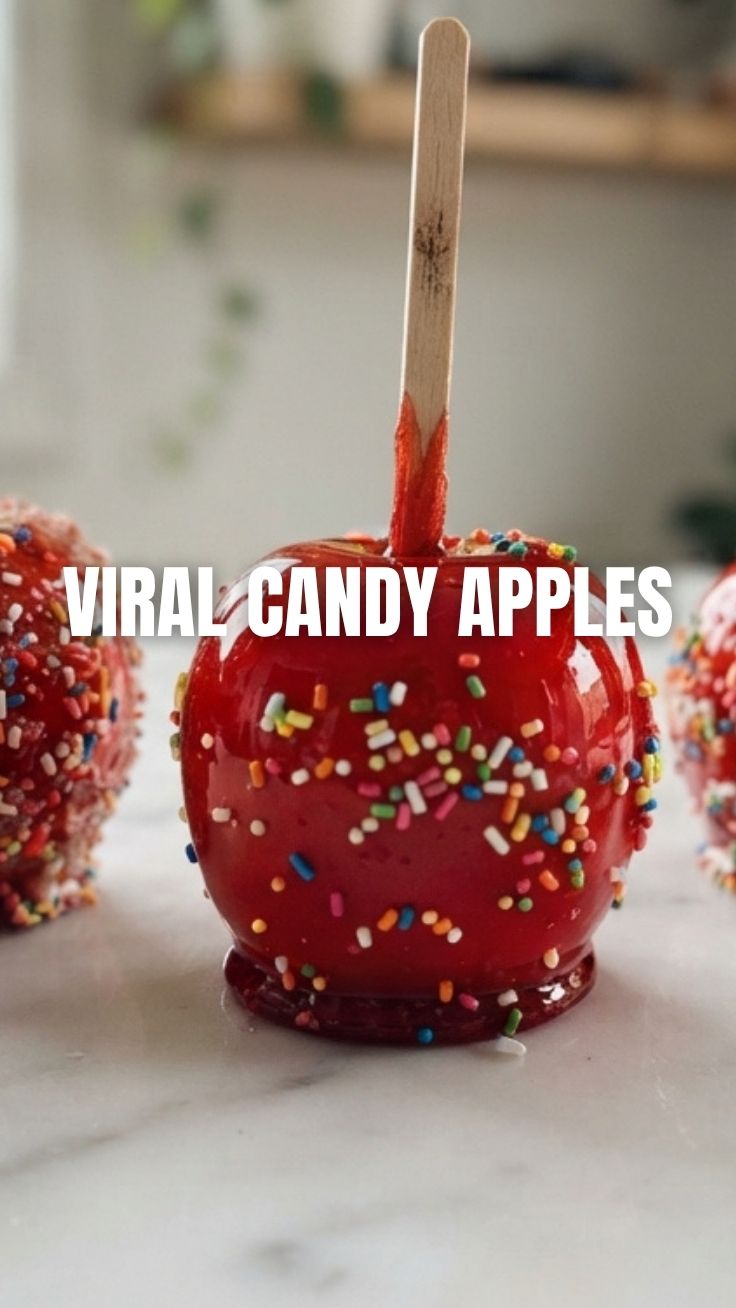
- Prep Time: 20 minutes (washing apples, inserting sticks)
- Cook Time: 20-30 minutes (syrup preparation)
- Cooling Time: 30-60 minutes
Begin by washing and thoroughly drying your apples. This is critical for the candy coating to adhere properly. Remove stems and insert a wooden skewer firmly into the core of each apple, about halfway through. Line a baking sheet with parchment paper or a silicone mat. This preparation time is crucial for a smooth cooking process.
Step-by-Step Instructions
1. Prepare the Apples: As mentioned, wash and thoroughly dry your apples, then firmly insert skewers into each. Set aside.
2. Combine Ingredients: In your heavy-bottomed saucepan, combine the granulated sugar, light corn syrup, water, and white vinegar. Stir gently over medium heat until the sugar dissolves. Avoid aggressive stirring once the mixture begins to boil, as this can encourage crystallization.
3. Boil and Monitor Temperature: Bring the mixture to a boil without stirring. Attach your candy thermometer to the side of the pan, ensuring it doesn’t touch the bottom. Continue to cook, occasionally brushing down any sugar crystals from the sides of the pan with a wet pastry brush.
4. Reach Hard Crack Stage: Cook until the mixture reaches 300-310°F (149-154°C), the “hard crack” stage. Remove from heat immediately, then stir in the red food coloring until evenly distributed. This precise temperature ensures your Candy Apples have that perfect snap.
5. Dip the Apples: Working quickly, carefully dip each apple into the hot candy mixture, tilting the pan and rotating the apple to ensure even coverage. Allow any excess candy to drip back into the pan. This technique is similar to how you would approach dipping for caramel apples, though the coating consistency is different.
6. Cool: Place the dipped apples on your prepared parchment paper or silicone mat to cool completely.
Nutritional Benefits & Advantages
While Candy Apples are undoubtedly a sweet indulgence, they do offer some surprising benefits. Apples themselves are rich in fiber, antioxidants, and essential vitamins like Vitamin C. Using fresh, crisp apples means you’re still getting a serving of fruit. Furthermore, making them at home allows you to control the quality of ingredients, avoiding artificial flavors or preservatives often found in commercial versions. The process also offers a fun, engaging, and educational activity, especially for families.
Tips, Variations & Cooking Advice
- Flavor Variations: Instead of red food coloring, try green apple flavoring or a mix of cinnamon for a spicy kick. For caramel apples, consider adding a sprinkle of sea salt after dipping for a gourmet touch.
- Texture Control: For a thinner, crispier shell, reach the higher end of the hard crack temperature (310°F). For a slightly chewier, thicker coating, aim for 300°F.
- Apple Choice: While Granny Smiths offer a delightful tart contrast, other firm apples like Fuji or Gala can also be used. Ensure they are free of bruises or soft spots.
- Working with Kids: This is a fantastic family activity! Supervise closely when handling hot sugar, but allow children to help with washing apples or choosing skewers.
Common Mistakes to Avoid
- Under-drying Apples: Any moisture on the apple surface will prevent the candy from adhering properly, leading to a runny or patchy coating.
- Not Using a Candy Thermometer: Guessing the temperature often results in either a sticky, soft candy or a burnt, brittle one. Precision is key.
- Stirring While Boiling: Once the sugar syrup begins to boil, stirring can cause crystallization, leading to a grainy candy.
- Heating Too Quickly: Rushing the syrup can lead to uneven cooking and burning. Maintain medium heat.
Storage & Meal Prep Tips
Candy Apples are best enjoyed fresh, ideally within a day or two of preparation. Store them individually wrapped in cellophane or airtight containers at room temperature. Refrigeration can cause the candy coating to become sticky and dull. Avoid freezing, as this will significantly alter the texture of both the apple and the candy. If prepping for an event, consider making them the morning of or the night before for optimal freshness and texture.
Conclusion
Crafting your own delicious Candy Apples and caramel apples is a rewarding experience that yields beautiful, delectable treats far superior to store-bought versions. By following these detailed instructions and paying attention to key details like temperature and apple preparation, you’ll master the art of these classic confections. Don’t be afraid to experiment with flavors and designs, and most importantly, have fun with the process! We encourage you to try this recipe and share your impressive results in the comments below.
FAQs
Q1: Why did my candy coating turn out sticky instead of hard?
A1: This usually means the candy syrup didn’t reach the “hard crack” stage (300-310°F). Ensure you use a reliable candy thermometer and cook until the correct temperature is achieved. Humidity can also be a factor; avoid making candy on very humid days.
Q2: Can I use brown sugar for the candy coating?
A2: While you can, brown sugar will give a different flavor and a less vibrant color. For traditional Candy Apples, granulated white sugar is recommended for its neutral flavor profile and ability to create a clear, vibrant coating.
Q3: How do I prevent air bubbles in the candy coating?
A3: Air bubbles can be minimized by submerging the apple smoothly and slowly, rotating it gently, and allowing excess to drip off naturally. Avoid plunging the apple too quickly into the hot syrup.
Q4: My candy started to harden in the pan while I was dipping. What do I do?
A4: If the candy begins to harden, you can gently reheat it over very low heat, stirring constantly, until it becomes liquid again. Be very careful not to scorch it or exceed the hard crack stage. Working quickly is key when dipping.
Q5: Can I make caramel apples using a similar method?
A5: Yes, the preparation of the apples (washing, drying, skewering) is the same. However, the caramel mixture involves different ingredients (often butter, brown sugar, heavy cream) and a slightly lower target temperature, usually around 245°F (soft ball stage), for that iconic chewy texture.