Master the Art of Texas BBQ: Crafting Authentic BBQ Brisket (Texas Style) at Home
Ever dreamt of sinking your teeth into incredibly tender, smoky, and irresistibly flavorful BBQ Brisket (Texas Style) without leaving your backyard? The thought of a perfectly moist cut of smoked brisket often conjures images of seasoned pitmasters and complex equipment. But what if I told you that achieving this legendary Texan delicacy at home is not only possible but incredibly rewarding? This comprehensive guide will demystify the process, empower you to create a culinary masterpiece, and perhaps even turn you into your neighborhood’s go-to BBQ expert. Preparing this iconic dish yourself not only guarantees the freshest, highest-quality ingredients but also allows you to customize the flavor profile to your heart’s content. Let’s embark on this smoky adventure together!
Ingredients & Kitchen Tools
Crafting exceptional BBQ Brisket requires a few essential items. Here’s a comprehensive list to get you started:
- 12-15 lb Brisket (Full Packer): This includes both the flat and the point, crucual for that authentic Texas flavor and texture. Look for good marbling.
- Coarse Kosher Salt: For a classic, simple bark. Avoid finely ground salt.
- Coarse Black Pepper: Freshly ground for the best flavor and texture in the bark.
- Optional Binder (Yellow Mustard or Hot Sauce): A thin layer helps the rub adhere, doesn’t impact flavor significantly.
- Wood Chunks or Chips (Oak or Pecan recommended): Essential for that deep, smoky flavor. Avoid mesquite for long cooks, as it can be overpowering.
- Butcher Paper (Pink or Peach): For wrapping the brisket during the stall. Helps retain moisture while allowing for bark development.
- Large Roasting Pan or Aluminum Foil Pan: To place the brisket in during the smoking process and for resting.
- Sharp Carving Knife (preferably a long, thin slicing knife): For clean, precise slices.
- Instant-Read Meat Thermometer: Crucial for monitoring internal temperature accurately.
- Smoker (Pellet, Offset, or Electric): The heart of your operation, capable of maintaining consistent low temperatures.
- Cutting Board (large): To accommodate the full brisket.
- Heat-Resistant Gloves: For handling hot brisket.
- Spray Bottle (optional): For apple cider vinegar or water spritzes during the cook.
Prep Time & Cooking Schedule
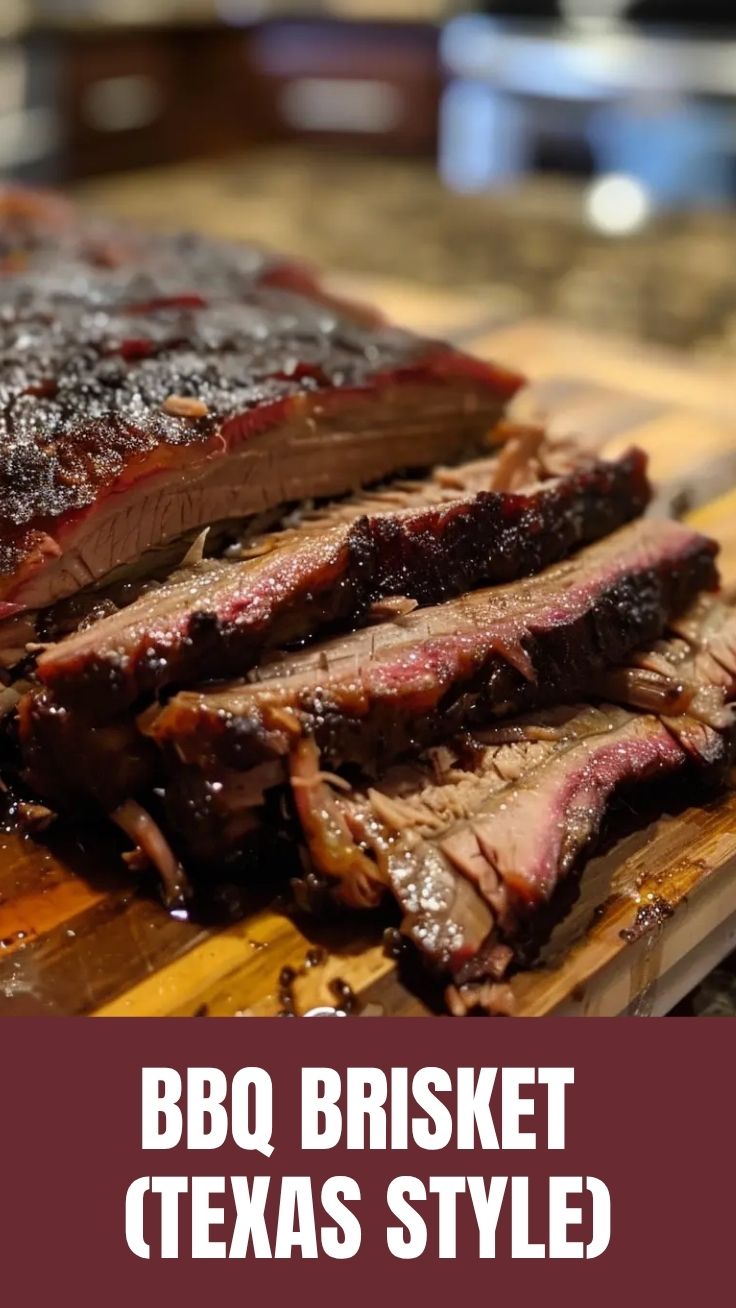
The “low and slow” philosophy truly applies to BBQ Brisket (Texas Style). Patience is your most important ingredient.
- Prep Time: 30-60 minutes (trimming, seasoning)
- Cook Time: 10-18 hours (approximately 1-1.5 hours per pound, but cook to tenderness, not time)
- Resting Time: 2-4 hours (critical for juiciness and even moisture distribution)
Planning Your Cook: Due to the long cook time, it’s often best to start your brisket late the night before or very early in the morning, especially if you plan to serve it for dinner. Factor in the long resting period – it’s non-negotiable for a truly succulent result.
Step-by-Step Instructions
1. Trim the Brisket: Start by trimming the hard fat off the smoked brisket. Aim for about a 1/4-inch fat cap on the flat side and remove any large, dense pockets of fat between the point and the flat. This ensures even cooking and allows the smoke to penetrate.
2. Season Generously: If using, apply a thin layer of mustard or hot sauce as a binder. Then, liberally apply the coarse kosher salt and coarse black pepper. Don’t be shy – the brisket is a large cut of meat!
3. Preheat Your Smoker: Get your smoker to a consistent temperature of 225-275°F (107-135°C). Use your chosen wood for smoke.
4. The Initial Smoke (Unwrapped): Place the brisket fat-side up or down, depending on your smoker’s heat source, directly on the grates. Smoke unwrapped until the bark has formed and darkened, and the internal temperature reaches roughly 165-175°F (74-79°C). This can take 5-8 hours. You may spritz with apple cider vinegar every 1-2 hours after the first few hours to keep the surface moist and enhance bark formation.
5. The Stall and Wrapping: Around 150-170°F (65-77°C), your brisket will likely enter “the stall” where its temperature plateaus as moisture evaporates and cools the meat. This is the perfect time to wrap it tightly in butcher paper. This helps push through the stall, tenderize the meat, and retain moisture while still allowing some bark development.
6. Finish Cooking (Wrapped): Return the wrapped brisket to the smoker. Continue cooking until the internal temperature reaches 200-205°F (93-96°C) and, more importantly, it feels probe-tender. A skewer or meat thermometer should slide into the meat with very little resistance, like warm butter. This can take another 4-8 hours. The most important tip for a perfect BBQ Brisket (Texas Style) is to cook to tenderness, not strictly to temperature.
7. The All-Important Rest: Once probe-tender, carefully remove the wrapped brisket from the smoker. Place it, still wrapped, in an insulated cooler (without ice) or a warm oven (turned off) for at least 2-4 hours. This resting period allows the muscle fibers to relax and reabsorb juices, resulting in an incredibly moist and tender final product. Do not skip this!
8. Slice and Serve: After resting, unwrap the brisket. Separate the flat from the point (they typically pull apart easily where the hard fat is). Slice the flat against the grain into pencil-thick slices. For the point, you can cube it for burnt ends or slice it against its distinct grain. Serve immediately with your favorite sides!
Nutritional Benefits & Advantages
Brisket, while a fattier cut, offers several nutritional benefits when enjoyed in moderation. It’s an excellent source of protein, essential for muscle repair and growth. It also provides vital micronutrients such as iron, crucial for oxygen transport, zinc, important for immune function, and various B vitamins, which play a key role in energy metabolism. The “low and slow” smoking process can also be considered a healthier cooking method compared to high-heat grilling, as it reduces the formation of potentially harmful compounds.
Tips, Variations & Cooking Advice
- Rub Variations: Experiment with adding garlic powder, onion powder, paprika, or even a touch of brown sugar for a slightly sweeter bark.
- Brisket Point Burnt Ends: After separating the point, cut it into 1-inch cubes, toss with extra rub and a touch of BBQ sauce, then return to the smoker for another 2-3 hours until sticky and caramelized.
- Injecting: Some pitmasters inject their brisket with beef broth or a seasoned liquid for added moisture and flavor.
- Smoking Wood: While oak and pecan are traditional, cherry or apple wood can add a sweeter, milder smoke profile if preferred.
- Don’t Fear the Fat: The fat cap renders down, basting the meat and contributing immensely to the flavor and moisture. A well-trimmed but present fat cap is crucial.
Common Mistakes to Avoid
- Under-Trimming or Over-Trimming: Too much fat prevents proper bark formation; too little leads to dry meat. Aim for that 1/4-inch fat cap.
- Not Cooking to Tenderness: Relying solely on internal temperature can lead to tough brisket. The “probe tender” test is paramount.
- Not Resting Long Enough: Impatience here will result in dry, less flavorful meat as juices leak out when cut.
- Slicing with the Grain: This is a cardinal sin! Always slice against the grain for maximum tenderness. The grain of the flat and point runs in different directions.
- Fluctuating Smoker Temperatures: Wild temperature swings dry out the meat and prolong cooking. Stability is key.
Storage & Meal Prep Tips
Leftover BBQ Brisket (Texas Style) is a treasure! Store any uneaten portions in an airtight container in the refrigerator for up to 3-4 days. For longer storage, slice or shred the brisket and freeze it in portions in vacuum-sealed bags or heavy-duty freezer bags for up to 3 months. When reheating, the best method is to gently warm the brisket in a shallow pan with a small amount of beef broth, covered, in an oven at 250°F (120°C) until just warmed through. This helps maintain moisture. Avoid microwaving if possible, as it can dry out the meat.
Conclusion
Mastering the art of BBQ Brisket (Texas Style) at home is an incredibly rewarding journey. From the meticulous trimming and generous seasoning to the patient, low-and-slow smoking process and the critical resting period, every step contributes to a truly unforgettable culinary experience. You’ve now gained the knowledge and confidence to transform a humble cut of beef into a succulent, flavorful smoked brisket that will impress anyone fortunate enough to taste it. Don’t be afraid to experiment, learn from each cook, and most importantly, enjoy the process. We encourage you to try this recipe, share your amazing results with us, and explore other related content to further hone your pitmaster skills. Happy smoking!
FAQs
1. What if my brisket isn’t getting tender even after reaching 205°F?
* Brisket tenderness is paramount. If it’s still not probe-tender, continue cooking. Some briskets can be stubborn and might need up to 210-215°F (99-102°C) or just more time at temperature. Trust the probe test over the exact temperature number.
2. Can I cook brisket without a smoker?
* While a dedicated smoker is ideal, you can achieve a “smoky” brisket in a conventional oven by using liquid smoke in the rub or adding a small amount of wood chips in a foil packet to a grill for initial smoke before moving it to the oven to finish. However, the true deep smoke flavor requires a smoker.
3. What’s the best way to get a good bark?
* A good bark relies on a generous, coarse rub (salt and pepper are key), consistent low temperatures, and not wrapping too early. Leaving the brisket unwrapped for the first 5-8 hours allows the exterior to dry out and form that desirable crust.
4. My brisket came out dry. What went wrong?
* Common culprits for dry brisket include overcooking (going too high on internal temp without checking for tenderness), not resting the brisket long enough, or trimming too much fat. Ensuring proper probe tenderness and adequate rest are crucial for juicy results.
5. How do I make burnt ends from the brisket point?
* After your brisket rests, separate the point from the flat. Cube the point into 1-1.5 inch pieces. Toss the cubes with extra rub and a touch of your favorite BBQ sauce. Return them to the smoker at 275-300°F (135-149°C) for another 2-3 hours until they are sticky, caramelized, and incredibly tender.