Unlock the Secret to Restaurant-Quality Chicken Piccata at Home
Ever wondered how your favorite Italian restaurant crafts those perfectly tangy, caper-studded dishes that leave you craving more? Today, we’re diving deep into the art of making an exquisite Chicken Piccata right in your own kitchen. This beloved classic, a cornerstone of delightful Italian recipes, isn’t just about delicious flavor; it’s also incredibly rewarding to prepare. Mastering this dish at home empowers you to control the quality of ingredients, personalize the flavors to your liking, and impress your family and friends with a truly memorable meal. Say goodbye to takeout and hello to homemade culinary magic!
Ingredients & Kitchen Tools
To embark on your Chicken Piccata journey, gather these essential items:
- Boneless, Skinless Chicken Breasts (2 large, approx. 1.5 lbs total): Choose organic or free-range for best flavor and texture. Pounded thin, they cook quickly and evenly.
- All-Purpose Flour (1/2 cup): For dredging the chicken, creating a delicate, golden crust. Gluten-free flour works beautifully as a substitute.
- Unsalted Butter (4 tbsp, divided): Adds richness and helps achieve that perfect golden-brown sear.
- Olive Oil (2 tbsp): Complements the butter for a higher smoke point and a crispier coating.
- Fresh Lemon Juice (1/2 cup, about 2-3 lemons): The star of the piccata sauce, providing a bright, tangy finish. Always use fresh for superior flavor.
- Chicken Broth (1/2 cup, low sodium): Forms the base of the luscious sauce. Vegetable broth is a fine alternative.
- Capers (2 tbsp, drained): These briny flower buds are non-negotiable for authentic Chicken Piccata. Their salty tang cuts through the richness.
- Fresh Parsley (2 tbsp, chopped): For a vibrant garnish and fresh aroma.
- Salt & Black Pepper (to taste): Essential for seasoning at every stage.
- Kitchen Mallet or Rolling Pin: For pounding chicken breasts evenly.
- Shallow Dish: For dredging flour.
- Large Skillet (preferably cast iron or stainless steel): For searing chicken and making the sauce.
- Whisk: For emulsifying the sauce.
- Tongs: For handling chicken safely.
Prep Time & Cooking Schedule
- Prep Time: 15 minutes (this includes pounding chicken, gathering ingredients, and chopping parsley)
- Cook Time: 20 minutes (searing chicken, building the sauce)
- Resting Time: 5 minutes (allowing the flavors to meld and chicken juices to redistribute)
This dynamic duo of prep and cook time makes Chicken Piccata an ideal weeknight meal or a sophisticated choice for a relaxed weekend dinner. Plan to start cooking about 45 minutes before you want to serve, giving yourself ample time to enjoy the process and create a fantastic dish.
Step-by-Step Instructions
1. Prepare the Chicken: Place each chicken breast between two sheets of plastic wrap. Using a kitchen mallet or rolling pin, pound them to an even 1/2-inch thickness. This ensures quick and even cooking. Season both sides with a pinch of salt and pepper.
2. Dredge: Place the flour in a shallow dish. Dredge each pounded chicken breast in the flour, shaking off any excess. This will create a delicate crust.
3. Sear the Chicken: Heat 2 tablespoons of butter and 1 tablespoon of olive oil in a large skillet over medium-high heat until the butter is melted and shimmering. Carefully add the chicken breasts to the hot pan, ensuring not to overcrowd it (cook in batches if necessary). Sear for 3-4 minutes per side, until golden brown and cooked through (internal temperature of 165°F/74°C). Remove the chicken from the pan and set aside on a plate.
4. Build the Sauce: Reduce the heat to medium. Add the remaining 2 tablespoons of butter and 1 tablespoon of olive oil to the same skillet, scraping up any browned bits from the bottom of the pan (this is where the flavor lives!). Pour in the fresh lemon juice and chicken broth. Bring to a gentle simmer, whisking occasionally, for 2-3 minutes to slightly reduce the sauce.
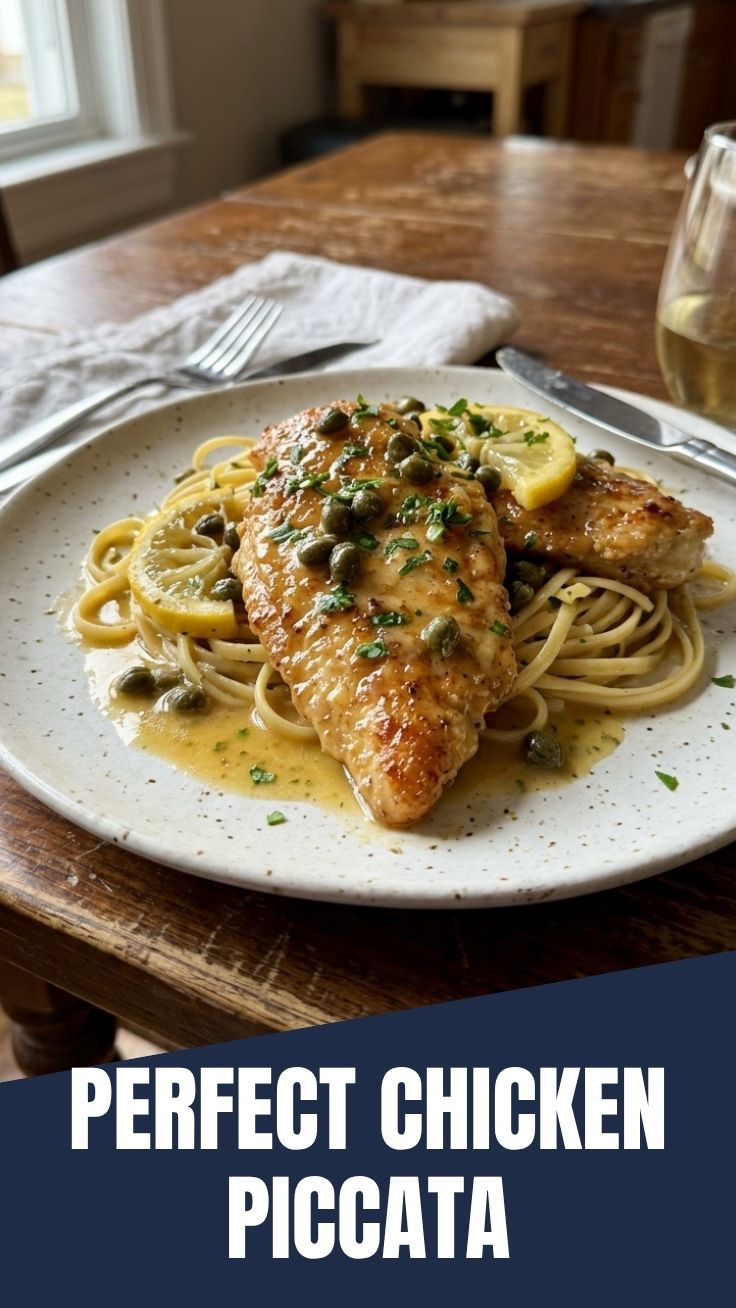
5. Add Capers & Finish: Stir in the drained capers. Return the seared Chicken Piccata to the skillet, spooning the luscious sauce over each piece. Garnish generously with fresh chopped parsley. This preparation is a jewel among Italian recipes, ensuring peak flavor and elegant presentation. Serve immediately.
Nutritional Benefits & Advantages
Chicken Piccata, when prepared with lean chicken breast, offers a satisfying and relatively healthy meal. Chicken is an excellent source of lean protein, essential for muscle repair and satiety. Olive oil contributes heart-healthy monounsaturated fats. Lemons are packed with Vitamin C, a powerful antioxidant that supports immune health. Capers add a distinctive flavor without adding many calories, and parsley provides vitamins A and K. This dish is naturally low in carbs and can be easily adapted to fit various dietary needs.
Tips, Variations & Cooking Advice
- Pounding is Key: Don’t skip pounding the chicken! It ensures tenderness and even cooking.
- Flavor Boost: For an extra layer of flavor in your sauce, add a splash of dry white wine (like Pinot Grigio or Sauvignon Blanc) before the chicken broth.
- Creamy Piccata: For a richer sauce, stir in 1/4 cup of heavy cream at the very end.
- Vegetarian Twist: Replace chicken with pan-fried eggplant slices or portobello mushroom caps for a delightful vegetarian Piccata.
- Spice it up: Add a pinch of red pepper flakes to the sauce for a subtle kick.
- Serving Suggestions: Serve your Chicken Piccata over pasta (angel hair or linguine are great), with roasted asparagus, steamed green beans, or a side of creamy mashed potatoes.
Common Mistakes to Avoid
- Overcrowding the Pan: This lowers the pan’s temperature, leading to steamed rather than seared chicken. Cook in batches if necessary.
- Overcooking the Chicken: Pounded chicken cooks quickly. Overcooked chicken is dry and tough. Aim for an internal temperature of 165°F (74°C).
- Skipping the Capers: Capers are fundamental to the authentic piccata flavor profile.
- Using Bottled Lemon Juice: Fresh lemon juice makes a significant difference in taste.
- Not Scrapping the Pan: Those browned bits (fond) from searing the chicken are crucial for a flavorful sauce.
Storage & Meal Prep Tips
Leftover Chicken Piccata can be stored in an airtight container in the refrigerator for up to 3-4 days. To reheat, gently warm in a skillet over low heat with a splash of chicken broth or water to prevent drying out and to refresh the sauce. Microwaving is an option, but it might alter the texture slightly. Freezing is not recommended as the sauce may separate, and the chicken’s texture can degrade upon thawing.
Conclusion
There you have it – a perfectly crafted, restaurant-quality Chicken Piccata that will undoubtedly become a staple in your culinary repertoire. This remarkable dish, showcasing the vibrant flavors emblematic of the finest Italian recipes, proves that elegance doesn’t have to be complicated. Don’t hesitate to try this recipe, experiment with the variations, and share your delicious creations with us! We can’t wait to hear how your homemade piccata turns out!
FAQs
Q1: Can I use chicken thighs instead of breasts?
A1: Yes, absolutely! Chicken thighs offer a richer flavor and are more forgiving if slightly overcooked. Adjust cooking time as needed, usually a few minutes longer per side.
Q2: What if I don’t like capers?
A2: While capers are essential for traditional piccata, if you genuinely dislike them, you can omit them. However, you’ll lose a significant part of the characteristic tangy, briny flavor. Consider adding a pinch of dried oregano or a few finely chopped sun-dried tomatoes for a different savory note.
Q3: How can I make my sauce thicker?
A3: If your sauce is too thin, you can create a quick slurry by mixing 1 teaspoon of cornstarch with 1 tablespoon of cold water. Whisk this mixture into the simmering sauce and cook for another minute until it thickens.
Q4: Can I prepare parts of this recipe in advance?
A4: You can pound and flour the chicken breasts a few hours ahead of time and store them in the refrigerator on a plate, covered. You can also juice the lemons and chop the parsley. However, it’s best to sear the chicken and make the sauce right before serving for optimal freshness and texture.
Q5: What’s the best way to pound chicken without making a mess?
A5: Place chicken breasts between two pieces of wax paper or sturdy plastic wrap. This prevents chicken bits from flying around and makes cleanup a breeze.