Master the Art of Gazpacho (Classic): Your Ultimate Guide to a Refreshing Summer Staple
Ever wondered how to capture the vibrant essence of summer in a single, refreshing bowl? Look no further than Gazpacho (Classic)! This iconic chilled soup, a true jewel of Spanish cuisine, offers a delightful escape from the heat while bursting with fresh flavors and essential nutrients. Preparing this authentic Spanish recipe at home isn’t just about cooking; it’s about embracing a culinary tradition that celebrates simplicity, freshness, and the joy of seasonal produce. In this comprehensive guide, we’ll walk you through every step to create a perfect gazpacho, demonstrating why it’s more than just a soup – it’s a refreshing art form.
Ingredients & Kitchen Tools
To embark on your gazpacho journey, gather these fresh ingredients and essential kitchen tools:
Ripe Tomatoes (1.5 kg / 3.3 lbs): Roma, beefsteak, or heirloom varieties work best for their rich flavor and low seed count. The foundation of your gazpacho.*
Cucumber (1 large): English or regular. Adds a crisp, refreshing note.*
Green Bell Pepper (1 medium): For a mild, slightly sweet counterpoint. Essential for authentic flavor.*
Red Onion (0.5 medium): Or 1 small. Provides a delicate pungency.*
Garlic Cloves (2-3): Adjust to your preference. Adds aromatic depth.*
Stale Bread (1 thick slice, crust removed): Any white bread will do. Helps thicken and emulsify, adding body.*
Extra Virgin Olive Oil (100 ml / ~7 tbsp): High-quality is key for flavor. The soul of Mediterranean cooking.*
Red Wine Vinegar (2-3 tbsp): Or sherry vinegar. Brightens flavors and adds a tangy kick.*
Cold Water (100-200 ml / ~7-14 tbsp): As needed for desired consistency. Adjusts texture.*
Salt (to taste): Fine sea salt recommended. Enhances all flavors.*
Black Pepper (to taste): Freshly ground. Adds a subtle spice.*
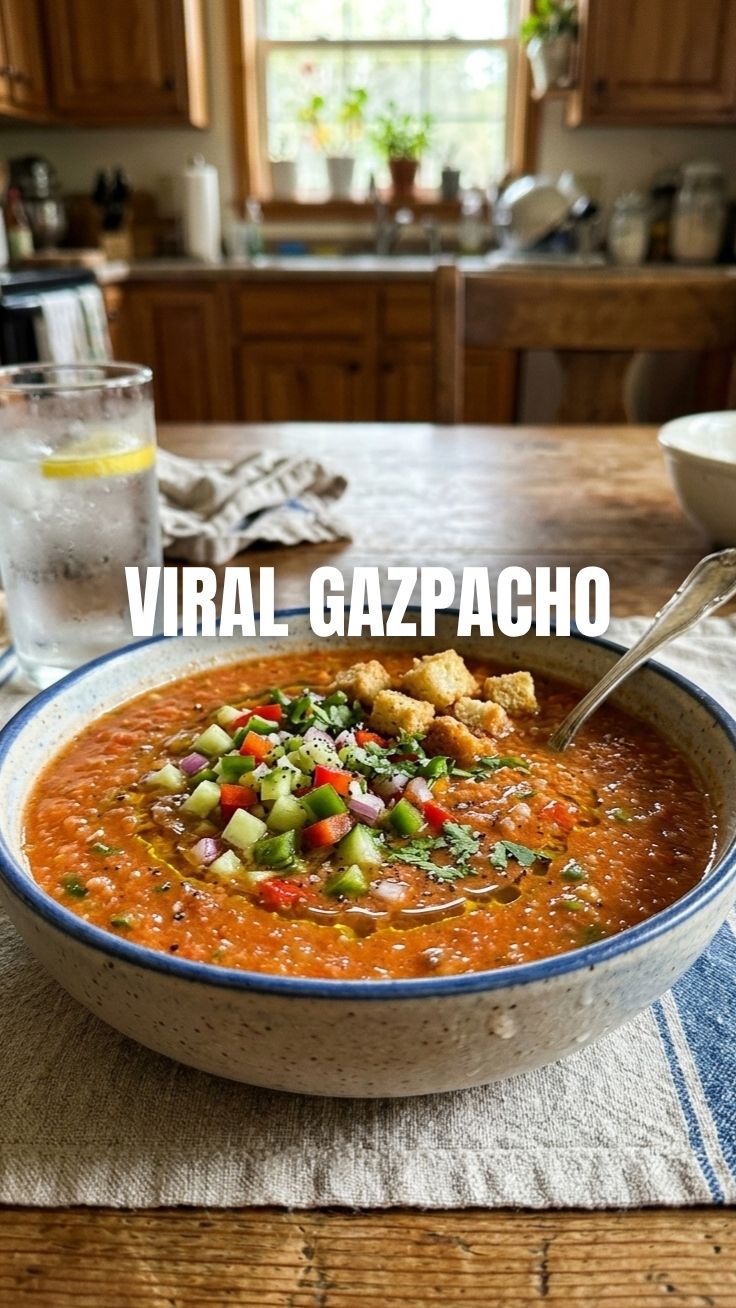
Optional Garnishes: Diced cucumber, bell pepper, croutons, a drizzle of olive oil, fresh herbs (parsley, chives).
Kitchen Tools:
Large Blender or Food Processor: For achieving that silky smooth consistency. Non-negotiable for traditional gazpacho.*
- Large Bowl: For mixing and chilling.
Fine-Mesh Sieve (optional but recommended): For an extra smooth gazpacho. Removes seeds and skins.*
- Sharp Knife: For chopping vegetables.
- Cutting Board: A stable surface for prep.
Prep Time & Cooking Schedule
- Prep Time: 20-30 minutes (active vegetable chopping and blending)
- Resting/Chilling Time: Minimum 2 hours, ideally 4 hours or overnight. This is crucial for the flavors to meld and for the soup to reach its optimal refreshing temperature. Do not rush this step!
Plan your gazpacho preparation in advance, especially if you’re serving it for a special occasion. Making it the day before allows the flavors to truly deepen, resulting in a more complex and satisfying experience.
Step-by-Step Instructions
1. Prepare the Vegetables: Wash all vegetables thoroughly. Roughly chop the tomatoes, cucumber, green bell pepper, red onion, and garlic. No need for precision here, as they will be blended.
2. Soak the Bread: Place the stale bread slice in a small bowl and cover it with a few tablespoons of cold water to soften. This will help it blend smoothly and integrate into the soup.
3. Blend the Core: In your blender or food processor, combine the chopped tomatoes, cucumber, green bell pepper, red onion, and garlic. Add the softened bread (squeezed lightly to remove excess water). Pour in the extra virgin olive oil and red wine vinegar.
4. Blend Until Smooth: Process the mixture until it reaches a very smooth, almost creamy consistency. This may take several minutes, depending on your blender. If it’s too thick, add cold water a little at a time until you reach your desired texture.
5. Season and Taste: Transfer the blended mixture to a large bowl. Stir in salt and freshly ground black pepper to taste. Remember, the flavors will intensify as it chills, so season judiciously. This is the moment to truly imbuse your Gazpacho (Classic) with the perfect balance.
6. Strain (Optional, but Recommended): For an exceptionally silky gazpacho, pass the mixture through a fine-mesh sieve, pressing down on the solids with a spoon to extract all the liquid. Discard any remaining pulp (skins, seeds). This step creates a restaurant-quality texture for this magnificent Spanish recipe.
7. Chill: Cover the bowl tightly and refrigerate for at least 2 hours, preferably 4 hours or even overnight. Chilling is paramount for the flavors to fully develop and for the soup to become truly refreshing.
8. Serve: Before serving, give the gazpacho a good stir. Adjust seasoning if necessary. Ladle into chilled bowls and garnish with your preferred toppings.
Nutritional Benefits & Advantages
Gazpacho is a nutritional powerhouse! It’s naturally low in calories and packed with vitamins, minerals, and antioxidants. Tomatoes are rich in lycopene, a potent antioxidant linked to heart health and cancer prevention. Cucumbers provide hydration, while bell peppers and garlic boost immunity with their vitamin C and allicin content. The extra virgin olive oil contributes healthy monounsaturated fats, promoting brain health and reducing inflammation. It’s a fantastic way to consume a significant amount of raw vegetables, ensuring maximum nutrient retention.
Tips, Variations & Cooking Advice
- Spice It Up: Add a pinch of smoked paprika for an authentic touch, or a dash of cayenne pepper for a subtle kick.
- Roasted Vegetables: For a deeper, more nuanced flavor, try roasting some of the tomatoes and bell peppers before blending.
- No Bread? No Problem: If you’re avoiding bread, you can omit it. The texture will be slightly thinner but still delicious. You could also try a small amount of avocado for creaminess.
- Herbaceous Notes: Experiment with fresh basil or cilantro for different aromatics.
- White Gazpacho (Ajo Blanco): Explore other Spanish chilled soups like Ajo Blanco, which features almonds, garlic, and grapes.
Common Mistakes to Avoid
- Not Chilling Long Enough: The biggest mistake! Warm gazpacho is simply not the same. Allow ample chilling time.
- Using Under-Ripe Tomatoes: The quality of your tomatoes dictates the quality of your gazpacho. Invest in ripe, flavorful ones.
- Over-Blending: While you want it smooth, don’t blend for so long that the mixture becomes too warm.
- Skimping on Olive Oil: High-quality extra virgin olive oil is crucial for the soup’s body and flavor. Don’t substitute with cheaper oils.
- Lack of Seasoning: Taste and adjust! Raw vegetables need proper seasoning to truly shine.
Storage & Meal Prep Tips
Gazpacho is a fantastic meal prep option! Store leftover Gazpacho (Classic) in an airtight container in the refrigerator for up to 3-4 days. The flavors often deepen and improve on the second day. Freezing is generally not recommended as it can affect the texture, making it somewhat watery upon thawing. If you must freeze, be aware that the texture may change. For best results, consume chilled.
Conclusion
Mastering this refreshing Spanish recipe is a culinary triumph that will surely delight your taste buds and impress your guests. This Gazpacho (Classic) is more than just a soup; it’s an experience – a vibrant, healthful, and utterly delicious testament to the power of fresh, simple ingredients. We encourage you to try this recipe, experiment with your favorite garnishes, and share your delightful creations with us! Embrace the chill and savor the incredible flavors of homemade gazpacho.
FAQs
Q: Can I use canned tomatoes?
A: While fresh ripe tomatoes are ideal for authentic flavor, you can use high-quality canned whole peeled tomatoes (drained) as a last resort, especially in winter. Adjust seasoning accordingly.
Q: My gazpacho tastes bland. What can I do?
A: This usually means it needs more salt, vinegar, or a touch more garlic. Taste and adjust incrementally until the flavors pop. Using truly ripe tomatoes also makes a huge difference.
Q: Do I really need to strain it?
A: Straining is optional but highly recommended for a traditional, smooth texture. If you prefer a rustic, chunkier gazpacho, you can skip this step.
Q: Can I make this vegan/gluten-free?
A: Yes! Gazpacho is naturally vegan. For a gluten-free version, simply omit the bread or use a gluten-free bread alternative.