Master the Art of Homemade Tuna Salad: A Fresh Take on a Classic
Are you tired of bland, store-bought tuna salad that lacks flavor and personality? Imagine a vibrant, satisfying dish that’s not only incredibly easy to make but also packed with nutrients and customizable to your heart’s content. Preparing your own Tuna Salad at home offers an unparalleled opportunity to control the quality of your ingredients, tailor the seasonings to your preference, and create a truly delightful culinary experience. This blog post will guide you through crafting the perfect tuna salad recipe that will become a staple in your kitchen.
Ingredients & Kitchen Tools
Crafting the perfect Tuna Salad starts with quality ingredients and the right tools. Here’s what you’ll need:
- Canned Tuna (2x 5oz cans, packed in water or olive oil): Drained thoroughly. We recommend high-quality, sustainably sourced tuna for the best flavor and texture.
- Mayonnaise (½ cup): Your favorite brand. Offers creaminess and binds the ingredients together. For a lighter version, use Greek yogurt or a blend of both.
- Celery (2 stalks): Finely diced. Adds a refreshing crunch and subtle earthy notes.
- Red Onion (¼ cup): Finely minced. Provides a zesty, pungent kick. Soak in cold water for 5 minutes to reduce harshness.
- Fresh Dill (2 tablespoons): Chopped. Contributes a bright, herbaceous aroma. Parsley or chives are also excellent.
- Dijon Mustard (1 teaspoon): Adds a tangy depth of flavor that complements the tuna beautifully.
- Lemon Juice (1 tablespoon): Freshly squeezed. Brightens the salad and balances the richness.
- Salt (to taste): Enhances all the flavors.
- Black Pepper (to taste): Freshly ground for best results.
- Optional Add-ins: Hard-boiled eggs (chopped), capers, sweet pickle relish, chopped bell peppers, or a pinch of paprika for color.
Kitchen Tools:
- Medium Mixing Bowl: For combining all ingredients.
- Fork: To flake the tuna and mix.
- Cutting Board & Knife: For prepping vegetables.
- Measuring Cups & Spoons: For accurate ingredient proportions.
- Rubber Spatula: For scraping the bowl and serving.
Prep Time & Cooking Schedule
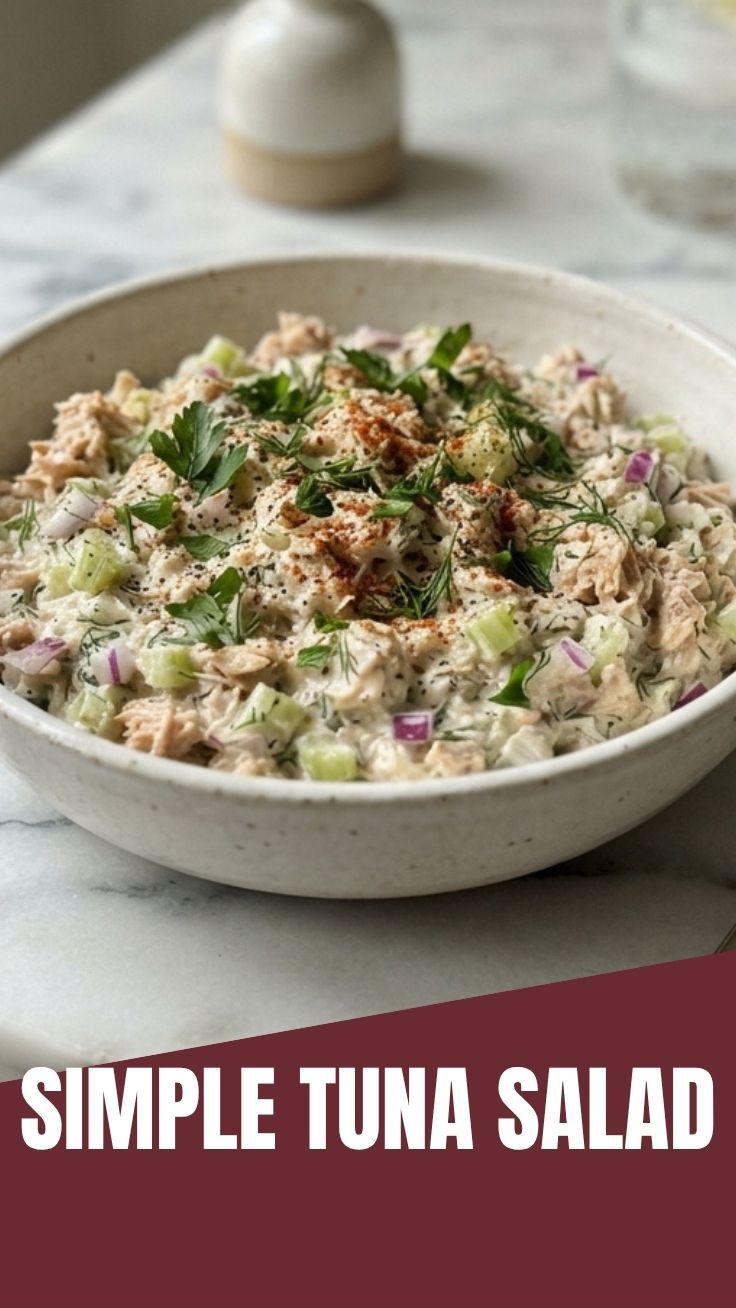
This Tuna Salad is a champion of quick meal prep!
- Prep Time: 15 minutes
- Cook Time: 0 minutes (no cooking required!)
- Resting Time: 15-30 minutes (optional, but recommended for flavors to meld)
You can easily whip this up in under 20 minutes, making it an ideal choice for a last-minute lunch or a quick dinner. Allowing it to chill for a short period in the refrigerator lets the flavors meld and intensify, resulting in an even more delicious experience.
Step-by-Step Instructions
Follow these simple steps to create a truly delicious Tuna Salad:
1. Drain the Tuna: Open both cans of tuna and drain them thoroughly. For tuna packed in water, you can gently press out excess water. If using tuna in olive oil, you can save a tablespoon of the oil for added richness if desired, or drain completely. Transfer the tuna to your medium mixing bowl.
2. Flake the Tuna: Using a fork, gently flake the tuna into smaller pieces. Avoid over-mashing; a slightly chunky texture is often preferred.
3. Prepare Vegetables: Finely dice the celery and mince the red onion. If desired, soak the red onion in cold water for a few minutes to mellow its flavor, then drain well. Chop the fresh dill. Add all prepared vegetables and herbs to the bowl with the tuna.
4. Add Wet Ingredients & Seasonings: To the bowl, add the mayonnaise, Dijon mustard, and fresh lemon juice. Season generously with salt and freshly ground black pepper.
5. Mix Everything Together: Using your fork or a rubber spatula, gently fold all the ingredients together until well combined. Ensure the dressing is evenly distributed without overworking the mixture, which can make the tuna mushy. Taste and adjust seasonings as needed – you might want more salt, pepper, or a touch more lemon juice or mustard. This simple tuna salad recipe is incredibly versatile, so don’t hesitate to customize!
6. Chill (Optional but Recommended): For optimal flavor, cover the bowl and refrigerate the tuna salad for at least 15-30 minutes before serving. This allows the flavors to deepen and meld.
Nutritional Benefits & Advantages
This homemade Tuna Salad isn’t just tasty; it’s a nutritional powerhouse. Tuna is an excellent source of lean protein, essential for muscle repair and growth, and is rich in Omega-3 fatty acids (DHA and EPA), which are crucial for brain health, heart function, and reducing inflammation. Celery adds fiber and antioxidants, while red onion offers prebiotics and immune-boosting compounds. The healthy fats from mayonnaise (especially if using an avocado oil or olive oil based variety) contribute to satiety. This meal is naturally low in carbs and can be a fantastic part of a balanced diet, providing sustained energy without a blood sugar spike.
Tips, Variations & Cooking Advice
- Spicy Kick: Add a dash of hot sauce, a pinch of cayenne pepper, or finely chopped jalapeños for some heat.
- Mediterranean Twist: Incorporate chopped Kalamata olives, sun-dried tomatoes, and a sprinkle of dried oregano.
- Herb Power: Experiment with other fresh herbs like parsley, chives, or even a hint of tarragon.
- Creamy Texture Alternatives: For a lighter version, replace some or all of the mayonnaise with plain Greek yogurt or mashed avocado.
- Crunch Factor: Add chopped bell peppers (any color), shredded carrots, or toasted nuts like pecans or walnuts.
- Dietary Adaptations:
* Gluten-Free: Ensure your mayonnaise is gluten-free (most are). Serve in lettuce cups, with gluten-free crackers, or over a bed of greens.
* Dairy-Free: This recipe is naturally dairy-free.
* Egg-Free: If you have an egg allergy, check your mayonnaise ingredients, or use a vegan mayonnaise alternative.
Common Mistakes to Avoid
1. Not Draining Tuna Properly: Excess water or oil will result in a watery, bland salad. Always drain well.
2. Over-Mixing: Mashing the tuna too much leads to a mushy texture. Aim for flaky pieces.
3. Lack of Seasoning: Tuna needs robust seasoning. Don’t be afraid to taste and adjust salt, pepper, and lemon juice.
4. Using Poor Quality Tuna: The quality of your tuna directly impacts the final flavor. Invest in good quality, sustainably sourced options.
5. Forgetting the Acid: Lemon juice or a touch of vinegar is crucial for brightening the flavors and cutting through the richness.
Storage & Meal Prep Tips
This Tuna Salad is excellent for meal prepping!
- Storage: Store in an airtight container in the refrigerator.
- Shelf Life: It will stay fresh for 3-4 days.
- Freezing: Tuna salad with mayonnaise does not freeze well, as the mayonnaise will separate upon thawing, affecting the texture.
- Reheating: Serve chilled. No reheating is required or recommended.
- Meal Prep Idea: Prepare a large batch at the beginning of the week. Portion it out with lettuce leaves, whole-wheat crackers, or in bell pepper halves for easy, grab-and-go lunches.
Conclusion
Whipping up your own Tuna Salad is a simple yet rewarding culinary endeavor. It’s a versatile dish that offers endless customization possibilities, allowing you to create a personalized, healthy meal or snack. By following this comprehensive guide, you’re not just making a meal; you’re mastering a classic that will serve you well for quick lunches, satisfying dinners, and delightful gatherings. We hope this tuna salad recipe becomes a cherished favorite in your kitchen. Try it out, experiment with your favorite additions, and share your delicious creations with us!
FAQs
Q1: Can I use fresh tuna instead of canned?
A1: Absolutely! Poached or lightly seared fresh tuna can be flaked and used, offering a more gourmet touch. Just ensure it’s cooked through and cooled before mixing.
Q2: How can I make this tuna salad lighter?
A2: Replace all or part of the mayonnaise with plain Greek yogurt, mashed avocado, or a light vinaigrette. You can also increase the amount of crunchy vegetables like cucumber or bell peppers.
Q3: What are some good serving suggestions for tuna salad?
A3: Serve it on whole-wheat bread, in a lettuce wrap, with crackers, in a hollowed-out tomato or bell pepper, or over a bed of mixed greens as a main course salad.
Q4: Can I add hard-boiled eggs?
A4: Yes, chopped hard-boiled eggs are a very popular and delicious addition, adding extra protein and richness.
Q5: My tuna salad tastes a bit bland. What can I do?
A5: Ensure you’ve seasoned generously with salt and black pepper. A squeeze of fresh lemon juice, a dash more Dijon mustard, or a pinch of finely minced garlic can significantly brighten the flavors. Don’t underestimate the power of fresh herbs!