Master the Art of the Perfect Pan-Seared Ribeye: Your Guide to Restaurant-Quality Steak at Home
Craving that elusive, perfectly cooked steak you only seem to find at high-end restaurants? What if I told you that achieving a juicy, flavorful Steak (Pan-Seared Ribeye) with a beautiful crust is entirely within your grasp, right in your own kitchen? Beyond the sheer joy of a delicious meal, mastering this culinary technique offers immense value. Not only does it empower you to control the quality of your ingredients and tailor flavors to your exact preferences, but it also provides a cost-effective alternative to dining out. This comprehensive guide will transform you into a grill master (or rather, a pan master!) with the confidence to consistently churn out a show-stopping Steak (Pan-Seared Ribeye) that will impress even the most discerning palates.
Ingredients & Kitchen Tools
To embark on this culinary journey, gather the following essentials:
- Ribeye Steaks (1.5-2 inches thick): We recommend good quality, well-marbled cuts for optimal flavor and tenderness. The thickness ensures a perfect sear without overcooking the center.
- Kosher Salt (coarse): Essential for seasoning and drawing out moisture, leading to a better crust.
- Freshly Ground Black Pepper: Adds aromatic depth.
- High Smoke Point Oil (e.g., Grapeseed, Avocado, Canola): Crucial for achieving a dark, even sear without burning.
- Unsalted Butter (2-4 tablespoons): Used for basting, adding richness and a beautiful golden-brown finish.
- Garlic Cloves (2-3, smashed): Infuses the butter with aromatic flavor during basting.
- Fresh Rosemary or Thyme Sprigs (2-3): Enhances the herbaceous notes during basting.
- Cast Iron Skillet (heavy-bottomed): The workhorse of this recipe! Its ability to retain and distribute heat evenly is paramount for a perfect sear.
- Tongs: For safely flipping the steak without piercing it (which would release precious juices).
- Instant-Read Meat Thermometer: Your best friend for ensuring perfect doneness every time. Avoid guesswork!
- Cutting Board: For seasoning and resting the steak.
- Aluminum Foil: For tenting the steak during the resting period.
Prep Time & Cooking Schedule
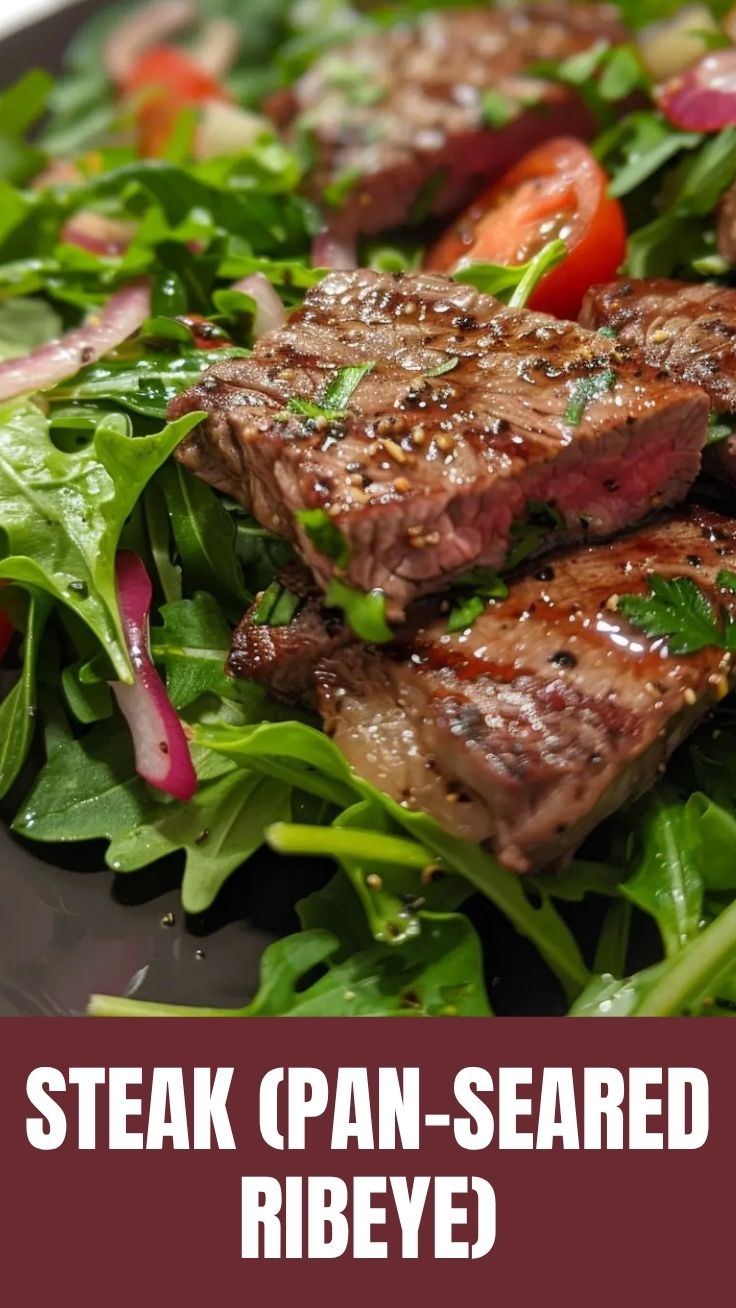
- Prep Time: 15 minutes (this includes bringing the steak to room temperature)
- Cook Time: 8-12 minutes (depending on thickness and desired doneness)
- Resting Time: 5-10 minutes
For optimal results, remove your ribeye steaks from the refrigerator at least 30-60 minutes before cooking. This allows the steak to come closer to room temperature, ensuring more even cooking throughout. Don’t rush the resting process after cooking; it’s a vital step for juicy results!
Step-by-Step Instructions
1. Pat Dry & Season Generously: Using paper towels, thoroughly pat both sides of your Steak (Pan-Seared Ribeye) dry. This is critical for achieving a crisp crust. Season generously with kosher salt and freshly ground black pepper on all sides.
2. Preheat Your Skillet: Place your cast iron skillet over high heat. Let it preheat for 5-7 minutes. It should be smoking slightly. This intense heat is key to a beautiful Pan-Seared crust.
3. Add Oil: Add a thin layer of high smoke point oil to the screaming hot skillet. Just enough to coat the bottom.
4. Sear the Steak: Carefully place the seasoned steak into the hot skillet. Do not overcrowd the pan if cooking multiple steaks. Sear for 2-3 minutes per side until a deep brown, caramelized crust forms. Use tongs to flip.
5. Baste with Butter and Aromatics: Reduce the heat to medium-low. Add butter, smashed garlic, and herb sprigs to the skillet. Tilt the pan slightly and, using a spoon, continuously baste the melting butter over the steak for 1-2 minutes, ensuring it’s evenly coated. This infuses flavor and helps achieve a uniform crust.
6. Check Doneness: Insert an instant-read thermometer into the thickest part of the steak.
* Rare: 120-125°F (remove at 115-120°F)
* Medium-Rare: 130-135°F (remove at 125-130°F)
* Medium: 135-140°F (remove at 130-135°F)
* Medium-Well: 145-150°F (remove at 140-145°F)
* Well-Done: 155°F+ (remove at 150°F+)
Remember, the internal temperature will rise by 5-10 degrees during resting.
7. Rest the Steak: Transfer the cooked steak to a cutting board. Tent loosely with aluminum foil and let it rest for 5-10 minutes. This allows the juices to redistribute, resulting in a more tender and flavorful steak.
8. Slice and Serve: Slice against the grain and serve immediately.
Nutritional Benefits & Advantages
Ribeye steak, while often perceived as an indulgence, offers significant nutritional benefits due to its rich protein content. It’s an excellent source of essential amino acids, crucial for muscle repair and growth. Furthermore, ribeye provides vital micronutrients like iron (important for oxygen transport), zinc (for immune function), selenium (an antioxidant), and B vitamins (for energy metabolism). Cooking a steak at home, especially with a Pan-Seared method, gives you complete control over the type and amount of fat used, avoiding excessive additives often found in restaurant preparations.
Tips, Variations & Cooking Advice
- Flavor Boost: Consider a dry brine 24 hours in advance by salting your steak and leaving it uncovered in the fridge. This further dries the surface and enhances flavor.
- Herb Variations: Experiment with different fresh herbs like sage or marjoram for distinct aromatic profiles.
- Spice Rubs: Before searing, try a simple spice rub with garlic powder, onion powder, and a pinch of cayenne for an extra kick.
- Compound Butter: Finish your steak with a pat of homemade compound butter (e.g., blue cheese butter, jalapeño lime butter) for an elevated experience.
- Doneness Preferences: Always rely on a meat thermometer! Visual cues can be misleading. Cook to your preferred internal temperature, remembering carryover cooking.
Common Mistakes to Avoid
- Not Drying the Steak: A wet surface steams, preventing a crust from forming. Always pat dry!
- Overcrowding the Pan: Reduces the pan temperature, leading to steaming instead of searing. Cook steaks in batches if necessary.
- Flipping Too Often: Resist the urge! Let the steak sit undisturbed to develop that beautiful crust.
- Not Letting the Pan Get Hot Enough: Insufficient heat will result in a gray, sad steak rather than a perfectly seared one.
- Skipping the Rest: The most common mistake! Resting is non-negotiable for tender, juicy results.
Storage & Meal Prep Tips
Leftover Steak (Pan-Seared Ribeye) can be stored in an airtight container in the refrigerator for up to 3-4 days. For longer storage, slice the cooked steak and freeze it in a single layer on a baking sheet before transferring to a freezer-safe bag or container; it will stay fresh for up to 3 months. When reheating, gently warm slices in a skillet over medium-low heat or in a microwave on a low setting. Be careful not to overcook, as this can dry out the steak. Leftover slices are fantastic in salads, sandwiches, or even quick stir-fries.
Conclusion
There you have it – the definitive guide to mastering a perfect Steak (Pan-Seared Ribeye), ensuring a tender, juicy interior with an irresistible, rich exterior. By following these steps, you’ll be able to confidently achieve that restaurant-quality flavor and texture right in your own kitchen. Remember, the key to an exceptional Pan-Seared steak lies in proper preparation, high heat, and patience, especially during the crucial resting period. Don’t hesitate to try this recipe and share your culinary triumphs with us! What’s your secret to a perfect steak?
FAQs
1. Can I use a different type of steak?
While ribeye is recommended for its marbling, you can apply this Pan-Seared technique to other thick cuts like New York strip or even sirloin. Adjust cooking times based on thickness and your desired doneness.
2. How do I get a thick crust on my steak?
Ensure your steak is as dry as possible, season generously with salt, and use a screaming hot cast iron skillet with a high smoke point oil. Don’t overcrowd the pan and resist flipping too often.
3. My steak is tough; what went wrong?
Toughness can result from overcooking, not resting the steak, or cooking a cut with less marbling. Always rest your steak, and use a thermometer to avoid overcooking.
4. Can I use olive oil for searing?
No, olive oil has a low smoke point and will burn at the high temperatures needed for searing. Stick to high smoke point oils like grapeseed, avocado, or canola.
5. How long should I rest my steak?
A general rule is 5-10 minutes for steaks 1.5-2 inches thick. For larger roasts, rest even longer (up to 20-30 minutes). The resting period is crucial for the redistribution of juices, ensuring a tender and flavorful final product.