Unlock the Secret to the Perfect Holiday Stuffing: Your Ultimate Guide!
Ever wondered what truly elevates a holiday meal from good to unforgettable? Often, it’s the humble yet incredibly flavorful Stuffing. This cherished side dish, rich in aroma and texture, can be the star of your festive table. While store-bought options abound, mastering a homemade version not only guarantees superior taste and quality but also allows for personalized touches that cater to all dietary needs, including those seeking a delicious keyword. Preparing this classic at home offers an unparalleled sense of accomplishment and ensures every bite is infused with love and care, creating lasting memories around the dinner table.
Ingredients & Kitchen Tools
Crafting the perfect stuffing requires a thoughtful selection of ingredients and the right tools. Here’s what you’ll need:
- 1 loaf (1 pound) day-old crusty bread, cut into 1/2-inch cubes: Stale bread absorbs liquids better, preventing sogginess. For a keyword option, use a high-quality gluten-free bread.
- 1 cup unsalted butter: Adds richness and helps develop a golden-brown crust.
- 2 large yellow onions, finely chopped: Provides a sweet and aromatic base.
- 4 stalks celery, finely chopped: Contributes a classic, earthy flavor and satisfying crunch.
- 2 cloves garlic, minced: Enhances the savory profile.
- 1/2 cup fresh parsley, chopped: Adds a herbaceous freshness.
- 2 tbsp fresh sage, chopped: Essential for that traditional holiday flavor. Use dried sage if fresh isn’t available, but reduce the amount to 1 tbsp.
- 1 tbsp fresh thyme, chopped: Complements the sage beautifully. Use dried thyme if fresh isn’t available, but reduce the amount to 1 tsp.
- 4-6 cups low-sodium chicken or vegetable broth: The liquid component that moistens the bread. Adjust quantity based on desired consistency. Use vegetable broth for a vegetarian/vegan version.
- 2 large eggs, lightly beaten (optional): Acts as a binder, creating a firmer stuffing. Omit for a vegan version.
- Salt and freshly ground black pepper to taste: Seasons the stuffing to perfection.
- Large roasting pan or 9×13 inch baking dish: For baking the stuffing.
- Large skillet or Dutch oven: For sautéing vegetables.
- Large mixing bowls: For combining ingredients.
- Sharp knife and cutting board: For prepping vegetables and bread.
Prep Time & Cooking Schedule
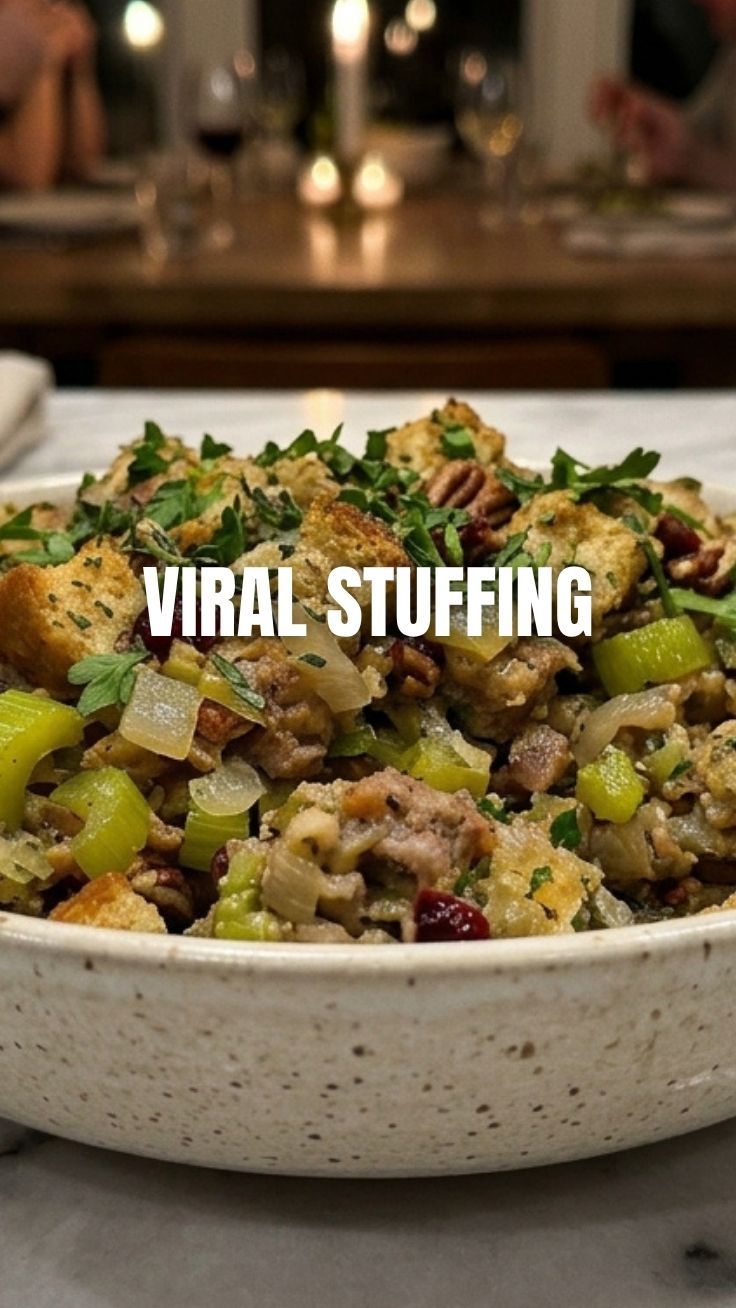
Planning is key for a stress-free holiday meal. This recipe allows for some advance preparation, so you can enjoy more time with your loved ones.
- Prep Time: 30 minutes
- Cook Time: 45-60 minutes
- Resting Time: 10 minutes (after baking)
You can prepare the bread cubes and sauté the vegetables a day or two in advance. Store the bread in an airtight container at room temperature and the sautéed vegetables in the refrigerator. This allows for quick assembly on baking day, making your holiday cooking experience much smoother.
Step-by-Step Instructions
Follow these detailed steps to create a truly spectacular Stuffing:
1. Prepare the Bread: If your bread isn’t day-old, you can toast it lightly in a 300°F (150°C) oven for 15-20 minutes until slightly dry. This prevents the stuffing from becoming mushy.
2. Sauté Aromatics: In a large skillet or Dutch oven, melt the butter over medium heat. Add the chopped onions and celery and cook until softened, about 8-10 minutes. Add the minced garlic and cook for another minute until fragrant.
3. Combine Ingredients: In a large mixing bowl, combine the dried bread cubes, sautéed onion mixture, fresh parsley, sage, and thyme. Toss gently to distribute the ingredients evenly.
4. Moisten the Mixture: Gradually add 4 cups of broth to the bread mixture, tossing gently until the bread is evenly moistened. If using eggs, whisk them into the remaining broth and then add to the mixture. The goal is to have the bread absorbed but not soggy; add more broth, a little at a time, if needed. For a heartier keyword, ensure the gluten-free bread fully absorbs the liquid without falling apart.
5. Season and Transfer: Season generously with salt and freshly ground black pepper. Taste and adjust seasonings as desired. Transfer the mixture to your prepared roasting pan or baking dish.
6. Bake: Cover the dish loosely with foil and bake for 30 minutes. Remove the foil and bake for an additional 15-30 minutes, or until the top is golden brown and crispy. The internal temperature should reach 165°F (74°C).
7. Rest and Serve: Let the stuffing rest for 10 minutes after removing it from the oven. This allows the flavors to meld and the texture to set.
Nutritional Benefits & Advantages
Beyond its delicious taste, this homemade Stuffing offers several nutritional advantages. When prepared with a variety of vegetables like onions, celery, and fresh herbs, it becomes a good source of vitamins, minerals, and dietary fiber. Utilizing low-sodium broth helps control salt intake, and adding lean protein (like sausage or mushrooms for a vegetarian option) can enhance its satiety. Choosing a keyword ensures that those with gluten sensitivities can still enjoy this holiday staple without compromise, often benefiting from the diverse grains and starches used in such breads.
Tips, Variations & Cooking Advice
- Additions: Incorporate cooked sausage, crumbled bacon, sautéed mushrooms, or chopped apples for added flavor and texture.
- Herb Variations: Experiment with rosemary or marjoram for a different aromatic profile.
- Moisture Control: For a crisper stuffing, add less broth. For a moister consistency, add more broth or even a splash of sherry or white wine.
- Dietary Adaptations:
* Gluten-Free: Use certified gluten-free bread.
* Dairy-Free: Use a plant-based butter substitute.
* Vegan: Use vegetable broth, omit eggs, and use plant-based butter.
- Stuffing the Bird: While tempting, baking the stuffing outside the turkey is safer and results in better texture. If you must stuff the bird, ensure the stuffing reaches 165°F (74°C).
Common Mistakes to Avoid
- Soggy Stuffing: This is often due to using fresh bread (which doesn’t absorb liquids efficiently) or adding too much liquid. Use day-old or lightly toasted bread.
- Dry Stuffing: Not enough liquid is the culprit here. Gradually add broth until the bread is fully moistened but not saturated.
- Bland Flavor: Don’t skimp on seasonings and fresh herbs. Taste and adjust as you go.
- Overcooking: While a crispy top is desirable, overcooking can lead to a dry interior. Monitor baking time and check for an internal temperature of 165°F (74°C).
Storage & Meal Prep Tips
Leftover Stuffing is a holiday treat! Store it in an airtight container in the refrigerator for up to 3-4 days. You can also freeze it for up to 3 months. To reheat, cover with foil and bake at 350°F (175°C) until heated through, or microwave individual portions. If reheating from frozen, thaw in the refrigerator overnight before baking. Adding a splash of extra broth before reheating can help maintain moisture.
Conclusion
Creating your own homemade Stuffing is a rewarding experience, transforming a simple side dish into a culinary masterpiece that truly embodies the spirit of the holidays. By following this comprehensive guide, with careful attention to details like selecting proper ingredients and considering options like a delicious keyword, you’ll be well on your way to crafting a memorable dish that will delight everyone at your table. Don’t hesitate to explore the variations and tips provided to personalize your creation. We encourage you to try this recipe and share your delectable results with us! Happy cooking!
FAQs
Q1: Can I make this stuffing ahead of time?
A1: Yes! You can prepare the bread cubes and sauté the vegetables up to two days in advance. Assemble the entire stuffing mixture (without baking) up to one day ahead, cover, and refrigerate. Bake just before serving.
Q2: What’s the best way to prevent soggy stuffing?
A2: The key is to use stale or lightly toasted bread, as it effectively absorbs moisture without becoming mushy. Also, add the broth gradually until the bread is just moistened, not swimming in liquid.
Q3: Can I add meat to this stuffing recipe?
A3: Absolutely! Cooked sausage, ground beef, or crumbled bacon are popular additions. Sauté them with the onions and celery for an extra layer of flavor.
Q4: How do I make this recipe vegetarian or vegan?
A4: For vegetarian, use vegetable broth and omit any meat additions. For vegan, use vegetable broth, omit the eggs (if using), and substitute butter with a plant-based alternative. Ensure your bread is vegan as well.
Q5: What’s the difference between stuffing and dressing?
A5: Traditionally, “stuffing” refers to the mixture cooked inside a bird, while “dressing” is baked in a separate dish. However, in modern culinary parlance, the terms are often used interchangeably, though baking it outside the bird is generally recommended for food safety and better texture.