Mastering the Perfect Roast Turkey: Your Ultimate Guide to a Flavorful Feast
Ever wondered how to achieve that perfectly golden, impossibly juicy Roast Turkey, rivaling even the most acclaimed culinary masterpieces? Preparing this beloved centerpiece at home isn’t just about saving money; it’s about infusing your celebration with love, tradition, and unparalleled flavor. This comprehensive guide will empower you to conquer this culinary challenge, transforming your next Thanksgiving dinner or special occasion into an unforgettable epicurean experience. We’re delving deep into techniques, tips, and tricks to ensure your Roast Turkey is the star of the show.
Ingredients & Kitchen Tools
Crafting the ultimate Roast Turkey requires a thoughtful selection of provisions and the right implements. Here’s a detailed list:
- 12-15 lb Whole Turkey (fresh or thawed): Opt for a free-range or organic bird for superior flavor and texture.
- 1 stick (1/2 cup) Unsalted Butter, softened: Essential for basting and crisping the skin.
- 2 large Yellow Onions, quartered: Adds aromatic depth to the roasting pan and stuffing.
- 4 Carrots, roughly chopped: Contributes sweetness and moisture to pan drippings.
- 4 Celery Ribs, roughly chopped: Balances the sweetness with a savory, earthy note.
- 1 head Garlic, cloves separated and smashed: Infuses the bird with pungent flavor.
- Fresh Herbs (e.g., Rosemary, Thyme, Sage): Aromatic powerhouses for stuffing cavity and garnishing.
- Salt (Kosher or Sea): Crucial for seasoning and drawing out moisture.
- Black Pepper, freshly ground: Adds a subtle kick and enhances other flavors.
- Chicken or Vegetable Broth (4-6 cups): For basting and creating flavorful gravy drippings.
- Optional Brine Ingredients: (See Tips & Variations) For enhanced moisture and flavor.
- Large Roasting Pan with Rack: Elevates the turkey for even cooking and crispier skin.
- Meat Thermometer (instant-read and/or leave-in): Absolutely essential for ensuring food safety and perfect doneness.
- Baster: For distributing pan juices over the turkey, keeping it moist.
- Kitchen Twine: To truss the legs, promoting even cooking.
- Aluminum Foil: For tenting the turkey and resting.
- Carving Knife and Fork: For effortless slicing.
Prep Time & Cooking Schedule
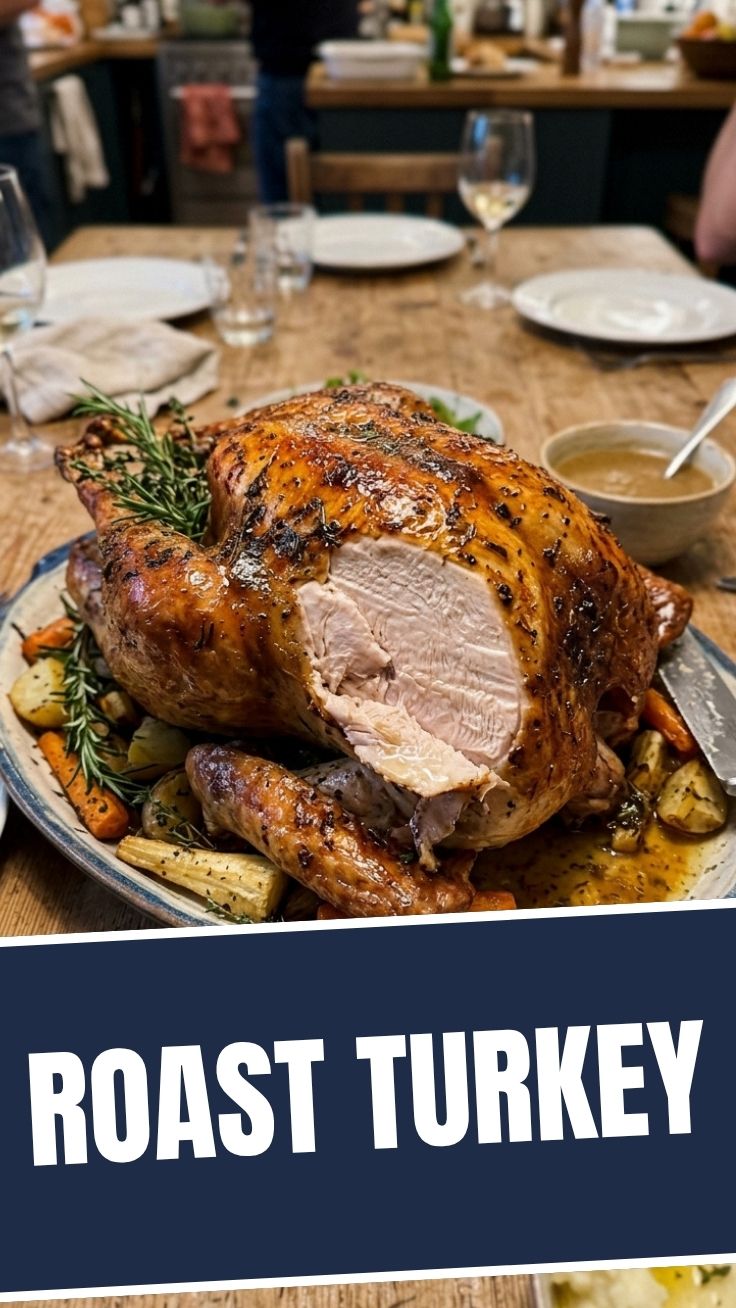
Planning is paramount for a stress-free Roast Turkey experience.
- Prep Time: 30 minutes (excluding brining, if applicable)
- Brining Time (Optional): 12-24 hours
- Cooking Time: Approximately 2.5-3.5 hours for a 12-15 lb turkey (allow 13-15 minutes per pound at 325°F/160°C).
- Resting Time: 30-45 minutes
Context: Thaw your turkey in the refrigerator for several days (allow 24 hours for every 4-5 pounds). Ensure it’s fully thawed before starting. On the cooking day, remove the turkey from the fridge at least an hour before roasting to bring it closer to room temperature, promoting more even cooking.
Step-by-Step Instructions
Embark on your journey to a perfectly cooked Roast Turkey with these meticulous instructions:
1. Prepare the Turkey: Remove the giblets and neck from the cavity. Pat the turkey thoroughly dry, inside and out, with paper towels. This step is crucial for crispy skin.
2. Seasoning: In a small bowl, combine softened butter with salt, pepper, and chopped fresh herbs. Gently separate the turkey skin from the breast meat and spread about half of the herb butter mixture directly onto the breast meat. Rub the remaining butter over the entire exterior of the turkey.
3. Aromatics: Stuff the turkey cavity with quartered onions, carrots, celery, garlic cloves, and a few sprigs of fresh herbs. Truss the legs together with kitchen twine.
4. Roasting Setup: Place the chopped onions, carrots, and celery in the bottom of your roasting pan. Pour 2 cups of broth into the pan. Place the turkey on the roasting rack, breast-side up.
5. Initial Roast: Preheat your oven to 425°F (220°C). Roast the turkey for 30 minutes to achieve a golden-brown skin.
6. Lower Temperature & Basting: Reduce the oven temperature to 325°F (160°C). Begin basting the turkey every 30-45 minutes with the pan juices and remaining broth (if the pan starts to dry out, add more broth).
7. Monitoring Doneness: Cook for the estimated time, but always rely on a reliable meat thermometer. Insert the probe into the thickest part of the thigh, avoiding the bone. The turkey is done when it reaches an internal temperature of 165°F (74°C). This ensures your Thanksgiving dinner centerpiece is perfectly safe and delicious.
8. Resting: Once cooked, remove the turkey from the oven, tent it loosely with aluminum foil, and let it rest for at least 30-45 minutes. This allows the juices to redistribute, resulting in a more tender and moist bird.
9. Carve & Serve: Carve the rested turkey and arrange it on a platter. Use the flavorful pan drippings to make a delicious gravy.
Nutritional Benefits & Advantages
Turkey is a lean protein powerhouse, rich in essential amino acids vital for muscle growth and repair. It’s also an excellent source of B vitamins (especially B6 and B12), selenium, and zinc, which support energy metabolism, immune function, and thyroid health. Its low-fat content (especially the breast meat) makes it a heart-healthy choice, contributing to a balanced diet and satiety without excess calories.
Tips Variations & Cooking Advice
- Brining for Juiciness: For an unbelievably moist turkey, consider wet or dry brining. A wet brine (salt, sugar, herbs, and aromatics in water) infuses moisture, while a dry brine (salt rubbed directly on the skin) crisps the skin and seasons the meat deeply.
- Flavor Boosts: Add citrus halves (lemon, orange) to the cavity for bright, zesty notes. Incorporate a variety of fresh herbs beyond rosemary and thyme, like marjoram or basil.
- Smoking: For a unique smoky flavor, consider smoking your turkey after an initial oven roast or entirely in a smoker.
- Spatchcocking: Removing the backbone and flattening the turkey (spatchcocking) allows for faster, more even cooking and incredibly crispy skin.
- Compound Butters: Infuse the butter with different flavor profiles, such as garlic-herb, smoked paprika, or citrus zest.
Common Mistakes to Avoid
- Not Thawing Properly: A partially frozen turkey will cook unevenly and take much longer.
- Overcooking: The number one enemy of a moist turkey! Always use a meat thermometer.
- Not Resting: Slicing immediately after roasting allows juices to run out, resulting in a dry bird. Patience is key!
- Not Seasoning Enough: Turkey needs generous seasoning to bring out its best flavor. Don’t be shy with salt and pepper.
- Ignoring Pan Drippings: These are liquid gold for gravy; don’t let them burn or dry out.
Storage & Meal Prep Tips
Store leftover cooked turkey in airtight containers in the refrigerator for up to 3-4 days. For longer storage, freeze carved turkey meat in freezer-safe bags or containers for up to 2-3 months. To reheat, gently warm in the oven or microwave, adding a splash of broth to prevent drying out. Leftover turkey is fantastic for sandwiches, soups, chili, salads, or even repurposed into new dishes.
Conclusion
Mastering the art of the perfect Roast Turkey is a culinary journey that rewards you with an incredibly satisfying, flavorful, and memorable meal. By following these detailed instructions, embracing the tips, and avoiding common pitfalls, you’re well on your way to creating a show-stopping Thanksgiving dinner or special occasion feast. We encourage you to try this recipe and share your triumphs! What’s your secret to a juicy turkey? Let us know in the comments below!
FAQs
- Q: How do I prevent my turkey breast from drying out?
* A: Brining, basting frequently, cooking to the correct internal temperature (165°F), and tenting during resting are key strategies. You can also cover the breast with foil during the last hour of cooking if it’s browning too quickly.
- Q: What if I don’t have a roasting rack?
* A: You can create a makeshift rack using tightly wadded aluminum foil balls or by placing thick-cut vegetables (like carrots and onions) in the bottom of the pan to elevate the turkey.
- Q: Can I stuff the turkey with traditional stuffing?
* A: While traditional, stuffing inside the turkey can slow down cooking and pose food safety risks. If you do stuff, ensure the stuffing also reaches 165°F. For safety and even cooking, it’s often recommended to bake stuffing in a separate dish.
- Q: How much turkey per person should I plan for?
* A: A good general rule is 1.5 pounds of uncooked turkey per person to account for bone weight and ensure some leftovers. So, for 10 people, a 15-pound turkey would be ideal.
- Q: My turkey skin isn’t crispy. What went wrong?
* A: The most common culprit is not patting the skin dry enough before roasting. Other factors include not starting at a high enough initial temperature or adding too much moisture to the roasting pan. Ensure air circulates around the turkey for optimal crispiness.