Master the Art of the Perfect Pot Roast: Your Ultimate Pot Roast Guide
Ever dreamt of that melt-in-your-mouth, fork-tender Pot Roast that evokes a sense of comfort and home? Preparing this classic dish at home isn’t just about cooking; it’s about creating an experience, a memory, and a deeply satisfying meal that nourishes both body and soul. Ditch the takeout and embrace the joy of crafting a savory, aromatic masterpiece right in your own kitchen. While it might seem daunting, mastering the perfect Pot Roast, especially with the invaluable aid of a Slow Cooker, is more accessible than you think. This comprehensive guide will walk you through every step, ensuring your next dinner is nothing short of spectacular. Get ready to impress your taste buds and your loved ones with a dish that consistently delivers rich flavors and unparalleled tenderness, making your Slow Cooker your new best friend for culinary triumphs.
Ingredients & Kitchen Tools
Crafting the perfect Pot Roast requires a few key ingredients and basic kitchen essentials.
- For the Roast:
* 3-4 lb Chuck Roast (Well-marbled for maximum flavor and tenderness.)
* 2 tbsp Olive Oil (For searing, adds a rich crust.)
* 1 large Onion, chopped (Aromatic base, sweetens as it cooks.)
* 3-4 Carrots, roughly chopped (Adds sweetness and essential nutrients.)
* 3-4 Celery Stalks, roughly chopped (Adds a subtle savory note.)
* 4-5 cloves Garlic, minced (Pungent, foundational flavor.)
* 1 cup Beef Broth (Adds richness and keeps the roast moist.)
* 1 cup Red Wine (Optional, but highly recommended for depth of flavor.)
* 2 tbsp Tomato Paste (Adds umami and a hint of acidity.)
* 1 tbsp Worcestershire Sauce (Adds complexity and savory notes.)
* 2 Bay Leaves (Aromatic, removed before serving.)
* 1 tsp Dried Thyme (Classic pot roast herb.)
* Salt and Black Pepper to taste (Essential for seasoning.)
- For the Thickener (Optional):
* 2 tbsp All-Purpose Flour or Cornstarch (For thickening the gravy.)
* 2 tbsp Cold Water (To create a slurry with the flour/cornstarch.)
- Kitchen Tools:
* Large Slow Cooker (5-7 quart capacity is ideal for 3-4 lbs of meat.)
* Large Skillet or Dutch Oven (For searing the roast.)
* Tongs (For easy handling of the meat.)
* Measuring cups and spoons (For accurate ingredient portions.)
* Cutting board and sharp knife (For prep work.)
* Whisk (For gravy preparation.)
Prep Time & Cooking Schedule
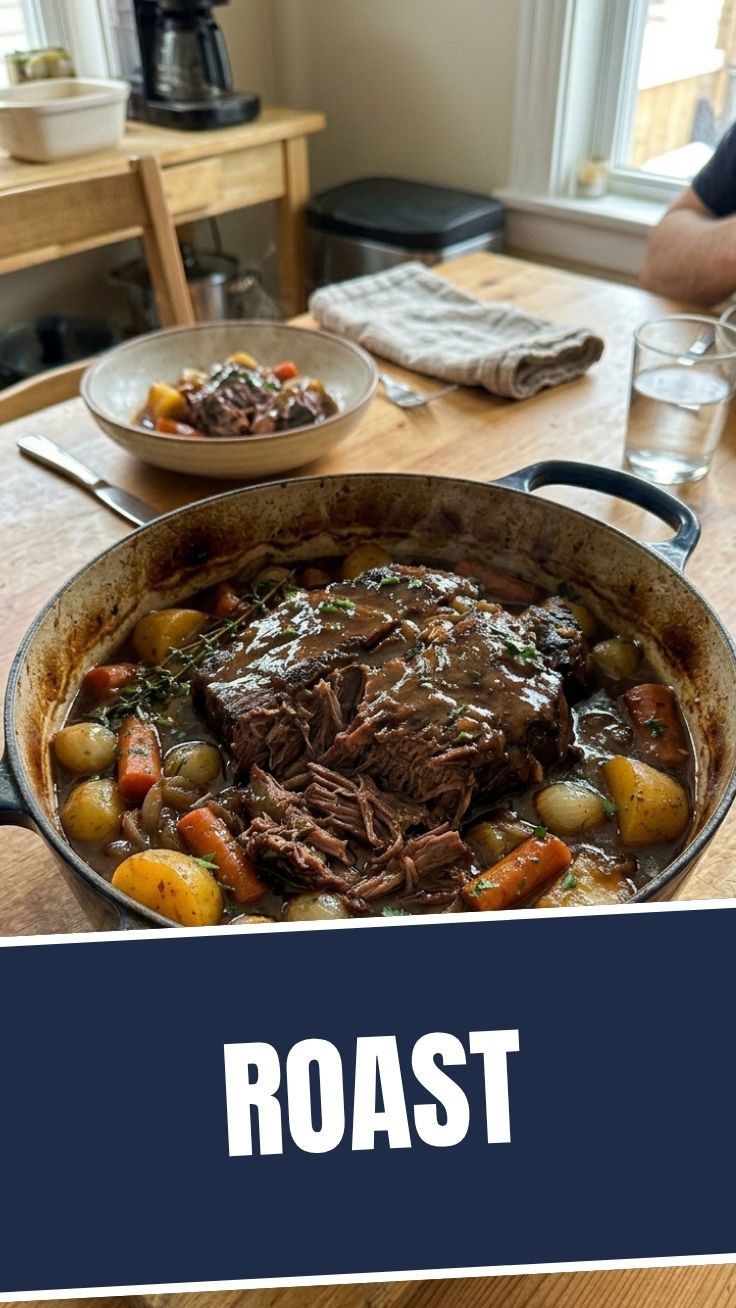
Planning is key for a truly effortless Pot Roast.
- Prep Time: 20-30 minutes (This includes chopping vegetables, trimming the roast, and searing.)
- Cook Time:
* High: 4-6 hours (For a quicker cook, monitoring tenderness is crucial.)
* Low: 8-10 hours (Recommended for optimal tenderness and flavor development.)
- Resting Time: 15-20 minutes (Crucial for juices to redistribute, ensuring a moist roast.)
This dish is perfect for a weekend meal or a weekday dinner with minimal hands-on time, allowing your Slow Cooker to do all the heavy lifting. Start it in the morning on low, and by dinner, you’ll have a heartwarming meal ready waiting for you.
Step-by-Step Instructions
1. Prepare the Roast: Pat the chuck roast dry with paper towels. Season generously all over with salt and black pepper. This step is crucial for developing flavor.
2. Sear for Flavor: Heat olive oil in a large skillet or Dutch oven over medium-high heat. Once hot, sear the roast on all sides until a deep, golden-brown crust forms (about 3-4 minutes per side). This adds critical depth of flavor. Remove the roast and set aside.
3. Sauté Aromatics: In the same skillet, add the chopped onions, carrots, and celery. Sauté for 5-7 minutes until softened. Add the minced garlic and tomato paste, cooking for another minute until fragrant.
4. Deglaze: Pour in the beef broth and red wine (if using), scraping up any browned bits from the bottom of the pan with a wooden spoon. This “deglazing” step captures all the delicious fond. Stir in the Worcestershire sauce, bay leaves, and dried thyme.
5. Assemble in Slow Cooker: Transfer the seared Pot Roast to your Slow Cooker. Pour the sautéed vegetables and liquid mixture over the roast. Ensure the liquid covers at least two-thirds of the meat.
6. Slow Cook: Cover your Slow Cooker and cook on low for 8-10 hours or on high for 4-6 hours, until the roast is incredibly tender and can be easily shredded with a fork.
7. Rest and Thicken (Optional): Once cooked, carefully remove the roast from the Slow Cooker and let it rest on a cutting board for 15-20 minutes, loosely tented with foil. This allows the juices to redistribute. While it rests, you can thicken the gravy: skim any excess fat from the cooking liquid. In a small bowl, whisk together flour or cornstarch with cold water to form a slurry. Whisk the slurry into the hot cooking liquid in the Slow Cooker and cook on high for 15-20 minutes, stirring occasionally, until thickened to your desired consistency.
8. Serve: Shred or slice the Pot Roast and serve with the rich gravy and cooked vegetables.
Nutritional Benefits & Advantages
This hearty Pot Roast is much more than just a delicious meal. Chuck roast is an excellent source of protein, essential for muscle repair and growth, and contains vital micronutrients like iron, zinc, and B vitamins, which support energy production and immune function. The inclusion of an array of vegetables like carrots, celery, and onions adds a valuable dose of fiber, vitamins (A, C, K), and antioxidants. Cooking in a Slow Cooker helps retain more of these nutrients, as the low and slow heat minimizes nutrient loss typically associated with high-heat cooking methods. It’s a wholesome meal that provides sustained energy and contributes to a balanced diet.
Tips, Variations & Cooking Advice
- Add Root Vegetables: For a complete meal, add quartered potatoes, parsnips, or turnips during the last 2-3 hours of cooking.
- Herb Variations: Experiment with fresh rosemary or sage instead of, or in addition to, thyme for different aromatic profiles.
- Balsamic Glaze: A splash of balsamic vinegar at the end can brighten the flavors and add a touch of tanginess.
- Spice it Up: For a subtle kick, add a pinch of red pepper flakes with the garlic.
- Dietary Adaptations:
* Gluten-Free: Ensure your beef broth is gluten-free. Use cornstarch (naturally gluten-free) instead of flour for thickening.
* Dairy-Free: This recipe is naturally dairy-free.
- Alternative Cooking Methods: While a Slow Cooker is ideal, this recipe can be adapted for a Dutch oven in the oven at 300°F (150°C) for 3-4 hours, or in an Instant Pot (pressure cooker) for 60-70 minutes with natural release.
Common Mistakes to Avoid
- Skipping the Sear: Searing the meat is non-negotiable! It creates a flavorful crust through the Maillard reaction, crucial for deep, rich taste. Without it, your pot roast will taste bland.
- Not Enough Seasoning: Be generous with salt and pepper. A large cut of meat requires substantial seasoning to penetrate and flavor the interior.
- Overcrowding the Skillet: When searing, work in batches if necessary to avoid steaming the meat instead of browning it.
- Inadequate Liquid: Ensure there’s enough liquid in the Slow Cooker to prevent drying out, but don’t submerge the roast entirely, as this can dilute the flavor.
- Not Resting the Meat: Resting allows the muscle fibers to relax and reabsorb juices, resulting in a significantly moister and more tender roast. Don’t skip this step!
Storage & Meal Prep Tips
Leftover Pot Roast is a gift! It often tastes even better the next day as the flavors meld further.
- Refrigeration: Store any cooled leftovers in an airtight container in the refrigerator for up to 3-4 days. Separate the meat and vegetables from the gravy if you prefer, or store them together.
- Freezing: For longer storage, freeze portions of cooked Pot Roast and gravy in freezer-safe containers or bags for up to 3 months. Thaw overnight in the refrigerator before reheating.
- Reheating: Gently reheat in a saucepan on the stove over low heat, or in the microwave, adding a splash of beef broth or water if it seems dry, to maintain moisture and prevent the meat from becoming tough.
Conclusion
There you have it – your ultimate guide to preparing a succulent, tender Pot Roast that will become a cherished family favorite. From the foundational act of searing to the magic that happens within the confines of your Slow Cooker, every step contributes to a dish that speaks volumes of comfort and culinary skill. We hope this comprehensive breakdown empowers you to create a memorable meal with confidence. Don’t hesitate to experiment with the tips and variations, making this recipe truly your own. Share your delicious results and let us know how your Pot Roast experience turns out – we can’t wait to hear about your culinary triumph with your trusty Slow Cooker!
FAQs
Q1: Can I use a different cut of beef for Pot Roast?
A1: While chuck roast is highly recommended for its marbling and connective tissue that breaks down beautifully in a Slow Cooker, you can also use beef brisket or round roast. Be aware that leaner cuts might require longer cooking times and may not be as tender, so monitor carefully.
Q2: My Pot Roast isn’t tender. What went wrong?
A2: The most common reason for tough Pot Roast is insufficient cooking time. The magic of a Slow Cooker is breaking down connective tissues, which takes time. Continue cooking until the meat easily shreds with a fork. It’s almost impossible to overcook a chuck roast in a slow cooker to the point of being dry.
Q3: Can I add potatoes to the Pot Roast?
A3: Absolutely! Add quartered potatoes (Russet, Yukon Gold, or red potatoes work well) during the last 2-3 hours of cooking. If added too early, they may become mushy.
Q4: How do I make the gravy thicker?
A4: After removing the roast, skim excess fat from the cooking liquid. Create a slurry by whisking 1-2 tablespoons of flour or cornstarch with an equal amount of cold water. Whisk the slurry into the hot liquid in the Slow Cooker, then cook on high for 15-20 minutes, stirring occasionally, until desired thickness is reached.