Unlocking the Soul-Soothing Secret: Your Guide to Homemade Chicken Soup
Have you ever wondered why homemade food always tastes better, especially when it comes to comforting classics? There’s an undeniable magic in a bowl of warm, nourishing Chicken Soup. Beyond just satisfying hunger, preparing this beloved dish at home offers a unique connection to tradition, a chance to infuse each spoonful with love, and the satisfaction of knowing exactly what goes into your meal. Today, we’re diving deep into crafting the perfect homemade version, exploring not just the steps, but the heart and soul of this culinary staple. Whether you’re a seasoned home cook or just starting your gastronomic journey, this guide focuses on creating delectable chicken soup recipes that will elevate your kitchen repertoire.
Ingredients & Kitchen Tools
Crafting the perfect hearty chicken soup requires a careful selection of ingredients and the right tools. Here’s what you’ll need:
- Whole Chicken (3-4 lbs): Opt for a free-range or organic bird for enhanced flavor. You can also use bone-in, skin-on chicken pieces like thighs or drumsticks.
- Carrots (3 large): Peeled and roughly chopped. Provides sweetness and vibrant color.
- Celery Stalks (3-4): Chopped. Adds aromatic depth.
- Yellow Onion (1 large): Quartered. Essential for the foundational flavor.
- Garlic Cloves (4-5): Smashed and peeled. For a pungent, savory kick.
- Fresh Parsley (1 bunch): Roughly chopped, both for cooking and garnish.
- Fresh Thyme (3-4 sprigs): Adds a subtle, earthy aroma.
- Bay Leaves (2): Deepens the savory notes.
- Chicken Broth (8 cups): Low-sodium is preferred, allowing you to control seasoning.
- Water (4-6 cups): To ensure the chicken is fully submerged and to create a rich broth.
- Egg Noodles (1 cup, dry): Or rice, pasta, or even quinoa for variations.
- Salt & Black Pepper: To taste, essential for seasoning.
- Olive Oil (1 tbsp): For sautéing aromatics (optional, but recommended).
Kitchen Tools:
- Large Stockpot or Dutch Oven (8-12 quart): Essential for simmering the soup.
- Cutting Board & Chef’s Knife: For precise ingredient preparation.
- Large Spoons or Ladles: For stirring and serving.
- Fine-Mesh Sieve or Colander: For straining the broth.
- Tongs or Slotted Spoon: For removing chicken and vegetables.
Prep Time & Cooking Schedule
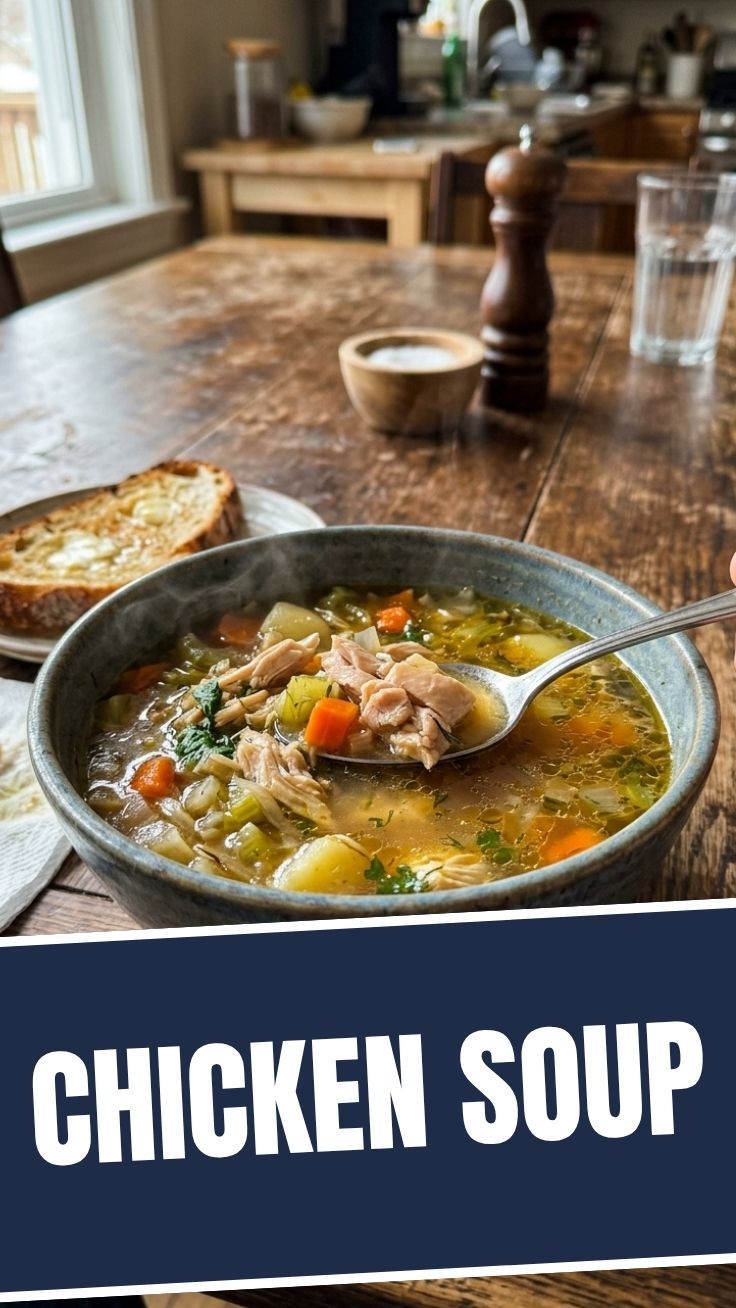
Planning is key for a truly comforting bowl.
- Prep Time: 20-30 minutes (This includes chopping vegetables and preparing the chicken.)
- Cook Time: 2-3 hours (This allows for a gentle simmer to extract maximum flavor from the chicken and vegetables. A longer simmer often yields a richer, more profound broth.)
- Resting Time: 15-20 minutes after straining the broth, to let the flavors meld and the chicken cool slightly before shredding.
This recipe is perfect for a lazy weekend afternoon, allowing the aromas to fill your home. You can also prepare the broth a day ahead, refrigerate it, and finish the soup with noodles and shredded chicken just before serving.
Step-by-Step Instructions
1. Prepare the Chicken: Rinse the whole chicken under cold water and pat it dry with paper towels. If using chicken pieces, do the same.
2. Sauté Aromatics (Optional): In your large stockpot, heat olive oil over medium heat. Add the quartered onion, chopped carrots, and celery. Sauté for 5-7 minutes until slightly softened and fragrant. This step deepens the base flavor of your Chicken Soup.
3. Combine Ingredients & Simmer: Place the chicken in the stockpot with the sautéed vegetables (if used). Add garlic, parsley, thyme, and bay leaves. Pour in the chicken broth and enough water to fully cover the chicken. Bring to a boil, then immediately reduce heat to a gentle simmer.
4. Skim & Cook: Skim off any foam that rises to the surface during the first 30 minutes of simmering. Continue to simmer, partially covered, for 1.5 to 2 hours, or until the chicken is falling off the bone and cooked through.
5. Remove Chicken & Strain Broth: Carefully remove the chicken from the pot and set it aside to cool. Strain the broth through a fine-mesh sieve into a clean bowl or back into the stockpot, discarding the spent vegetables and herbs. This ensures a clear, vibrant broth, a hallmark of excellent chicken soup recipes.
6. Shred Chicken & Reintroduce: Once the chicken is cool enough to handle, remove the skin and bones. Shred the meat into bite-sized pieces. Add the shredded chicken back to the strained broth.
7. Add Noodles & Finish: Bring the broth back to a gentle simmer. Add the egg noodles (or your preferred pasta/grain) and cook according to package directions, usually 7-10 minutes, until al dente.
8. Season & Serve: Season generously with salt and black pepper to taste. Ladle the hot soup into bowls and garnish with fresh parsley. Enjoy!
Nutritional Benefits & Advantages
This homemade Chicken Soup is a powerhouse of nutrition. The chicken provides lean protein, essential for muscle repair and satiety. The assortment of vegetables like carrots, celery, and onions offers a rich source of vitamins, minerals, and dietary fiber, supporting digestive health and boosting immunity. Garlic and herbs contribute antioxidants and anti-inflammatory properties. Furthermore, the slow simmering process extracts beneficial collagen from the chicken bones, which can promote joint health and gut healing. It’s a comforting and therapeutic meal, especially when you’re feeling under the weather.
Tips, Variations & Cooking Advice
- Flavor Boost: For an even richer broth, roast the chicken bones and vegetables before adding them to the pot.
- Vegetable Variations: Feel free to add other vegetables like potatoes, peas, corn, or spinach in the final 15 minutes of cooking.
- Spice It Up: A pinch of red pepper flakes or a dash of hot sauce can add a pleasant warmth.
- Herb Twists: Experiment with dill or marjoram for different aromatic profiles.
- Gluten-Free: Use gluten-free pasta or rice instead of traditional egg noodles.
- Dairy-Free: This recipe is naturally dairy-free.
- Pressure Cooker Method: For a faster cooking time, you can adapt this recipe for a pressure cooker, reducing the cooking time to about 30-45 minutes after reaching pressure.
Common Mistakes to Avoid
- Overcooking Noodles: Add noodles only towards the end of the cooking process to prevent them from becoming mushy.
- Not Skimming: Failing to skim the foam can result in a cloudy, less appealing broth.
- Undersalting: Broth needs a surprisingly generous amount of salt to bring out its full flavor. Taste and adjust!
- Cooking Vegetables Too Long: If you want distinct vegetable pieces, add them in stages, with softer vegetables like spinach added at the very end.
Storage & Meal Prep Tips
Leftover Chicken Soup stores beautifully, making it excellent for meal prepping.
- Refrigeration: Store cooled soup in airtight containers in the refrigerator for up to 3-4 days.
- Freezing: For longer storage, freeze the soup (without noodles, if possible, as they can get mushy upon reheating) in freezer-safe containers or bags for up to 3 months. Thaw overnight in the refrigerator before reheating.
- Reheating: Reheat gently on the stovetop over medium-low heat until simmering. If the soup is too thick, add a splash of broth or water.
Conclusion
There’s truly nothing quite like a steaming bowl of homemade Chicken Soup to bring warmth and comfort to your table. By following these detailed steps, you’ve not only created a nourishing meal but also mastered a foundational culinary skill, exploring the nuances of chicken soup recipes. We encourage you to try this recipe and experience the profound satisfaction of crafting such a universally beloved dish. Share your results in the comments below, or tell us your favorite family variations – we’d love to hear from you!
FAQs
Q1: Can I use boneless, skinless chicken breasts instead?
A1: Yes, you can, but the soup’s flavor won’t be as rich. Boneless, skinless chicken breasts cook faster; remove them once cooked through (around 30-40 minutes) to prevent them from drying out, then shred and add back at the end.
Q2: My broth is cloudy. What did I do wrong?
A2: A cloudy broth is often due to not skimming the impurities from the surface during the initial simmer, or from simmering too aggressively. A gentle simmer is key for a clear broth.
Q3: How can I make my chicken soup thicker?
A3: To thicken the soup, you can make a slurry by whisking a tablespoon of cornstarch (or flour) with an equal amount of cold water, then slowly stirring it into the simmering soup until desired thickness is reached.
Q4: Can I make this soup in a slow cooker?
A4: Absolutely! Place all ingredients (except noodles) in your slow cooker. Cook on low for 6-8 hours or on high for 3-4 hours. Remove chicken, shred, then add back along with noodles for the last 30 minutes of cooking.
Q5: What are some good herbs to add for more flavor?
A5: Besides parsley and thyme, consider adding a sprig or two of fresh rosemary for an earthy note, or a bay leaf (ensure to remove it before serving) for a subtle, peppery aroma. Dill also pairs wonderfully with chicken.